
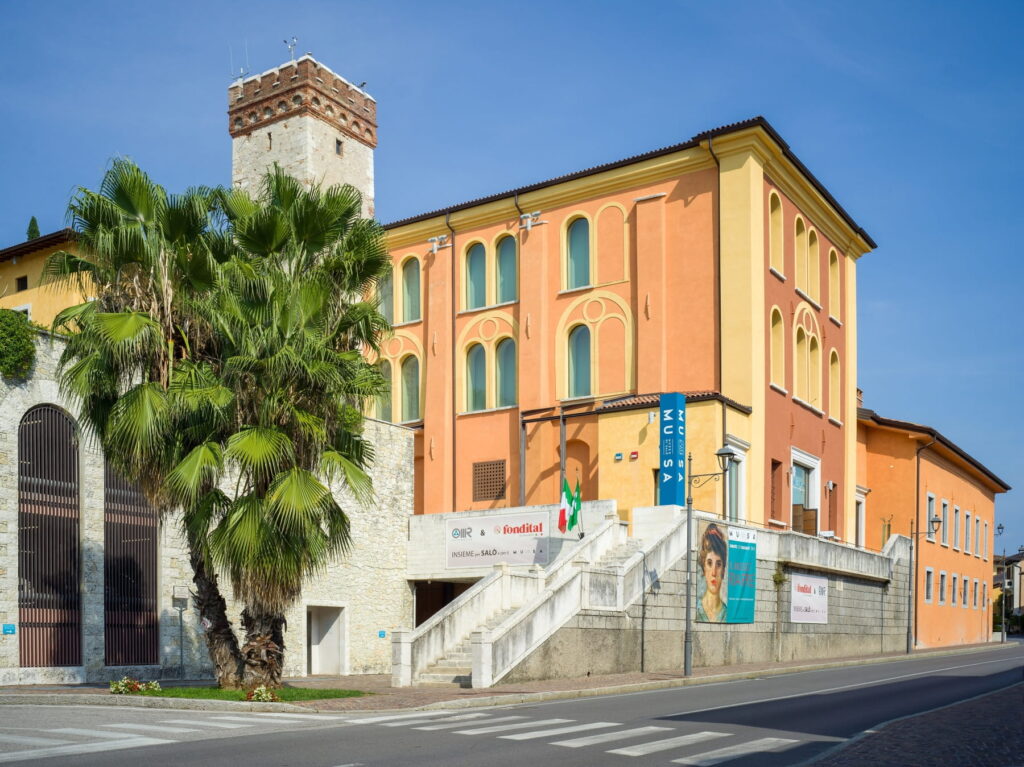
The MuSa (Museo di Salò) is the primary cultural hub of Salò, housed within a beautifully restored 16th-century Franciscan monastery. It offers a deep dive into the identity of this lakeside town, covering everything from its Roman origins and musical heritage to the controversial period when it served as the capital of the Italian Social Republic. Visiting the museum provides a necessary layer of historical context that enriches any trip to the shores of Lake Garda.
Why visit
The MuSa is distinctive because it avoids being a one-dimensional gallery; instead, it functions as a chronological narrative of Salò and the surrounding Lombardy region. The museum is housed in the Church of Santa Giustina complex, where the architecture itself—with its high ceilings and serene cloisters—serves as the first exhibit. Inside, the collections are surprisingly diverse, ranging from delicate 14th-century wooden sculptures to scientific instruments and modern art.
One of the most compelling reasons to visit is the museum’s commitment to local craftsmanship. Salò is the birthplace of Gasparo da Salò, often credited as the inventor of the modern violin. The museum honors this legacy with a dedicated section on lutherie, displaying rare instruments that highlight the town’s contribution to classical music. It is a quiet, contemplative space that offers a break from the sun-drenched crowds on the nearby promenade.
Furthermore, the MuSa does not shy away from the darker chapters of the 20th century. It hosts significant permanent and temporary exhibitions regarding the “Republic of Salò” (1943–1945). For history enthusiasts, seeing these artifacts in the very town where those events unfolded provides a tangible connection to the past that a textbook cannot replicate. The museum manages to balance these heavy historical themes with lighter sections focused on the natural history and biodiversity of the Garda landscape.
What to see / Highlights
- The Lutherie Collection: A tribute to Gasparo da Salò, featuring historical string instruments that trace the evolution of the violin family.
- The Anatomical Preparations: A unique and slightly macabre collection by Giovan Battista Rini, featuring “petrified” human remains from the early 19th century used for medical study.
- The Venetian Period Art: Grand canvases and sculptures that reflect the era when Salò was the “Magnifica Patria” under the rule of the Republic of Venice.
- Contemporary Art Exhibitions: The museum frequently hosts high-quality temporary shows, often focusing on Italian masters of the 20th century.
- The Cloister: The outdoor courtyard provides a peaceful architectural transition between the various wings of the museum.
- The Risorgimento and 20th Century Sections: Detailed displays documenting the unification of Italy and the complex political role Salò played during World War II.
Practical information
Location: The museum is located at the northern end of the historic center, just a short distance from the lakefront.
Accessibility:
- Walking: It is easily reached on foot from any part of the Historic Center or Lungolago Zanardelli.
- Parking: Finding a spot in Salò can be tricky, especially during the summer. For the quickest access to the museum, use Parcheggio Stazione (Via della Rocchetta 12), which is located immediately adjacent to the MuSa. If you prefer to start your visit at the southern end of town near the marina, use the Parcheggio coperto pubblico (Via Leonesio Marco 3).
Time Needed: To properly explore the permanent collections and any current temporary exhibitions, allow at least 2 hours.
Entry Details: There is an admission fee for the museum. While queues are rarely long, it is advisable to check the official website for current opening hours, as the museum sometimes closes for mid-day breaks or seasonal shifts.
Tips for visitors
Visit in the Afternoon: The MuSa is an excellent retreat when the afternoon sun becomes too intense on the lakefront. The thick stone walls of the former monastery keep the galleries naturally cool.
Check for Temporary Shows: The MuSa is known for hosting ambitious temporary art exhibitions that are not always widely advertised outside of the region. Check the local posters or the museum website beforehand; these shows often feature works from private collections that are rarely seen by the public.
Combine with a Walk: Since the museum is at the edge of the pedestrian zone, start your day here and then walk south through the Historic Center. This allows you to see the artifacts first, giving you a better understanding of the statues and plaques you will encounter in the streets later.
Photography: Photography is generally permitted without flash, but certain temporary exhibitions may have stricter rules. Always look for signage at the entrance of specific galleries.
Official website: Information about opening hours, admission fees and current events can be found on the official MuSa website.
Nearby places
- Lungolago Zanardelli: A wide, elegant promenade lined with cafes and historic buildings, perfect for a walk after visiting the museum.
- Duomo di Santa Maria Annunziata: The town’s main cathedral, featuring an unassuming facade that hides a grand interior with significant Renaissance artworks.
- Piazza Vittorio Emanuele II: A central hub known for its clock tower and gateway leading into the heart of the old town.
- Palazzo della Magnifica Patria: A beautiful palace on Lungolago Zanardelli that once served as the seat of government and now houses municipal offices.
- Historic Center: A maze of narrow alleys and small boutiques that preserves the medieval and Renaissance character of Salò.
- The Marina: Located at the southern end of the bay, this area offers a different perspective of the lake with various boating facilities.
How to Visit / Combine This Place
The MuSa is best visited as the cultural anchor of a day trip to Salò. A practical itinerary involves parking at Parcheggio Stazione in the morning, visiting the museum while your energy is fresh, and then descending into the Historic Center for lunch.
For those wanting a deeper understanding of the local history, consider looking for a guided tour that links the museum’s collections with the Palazzo della Magnifica Patria. If you are visiting multiple sites in the region, check if there are combined tickets available that include other local attractions. Because the museum is located near the start of the pedestrian zone, it serves as a logical starting point before wandering down to the Duomo di Santa Maria Annunziata and finishing the day at the Marina.
Is It Worth Visiting?
The MuSa is certainly worth a visit for those who want to see beyond the surface of Lake Garda’s resort culture. It will appeal most to history buffs, art students, and travelers who enjoy understanding the “why” behind a destination. While it may be less engaging for very young children, anyone with an interest in Italian heritage or the evolution of musical instruments will find it a rewarding addition to their itinerary. It is a grounded, authentic experience that provides a quiet contrast to the typical tourist activities of the region.