
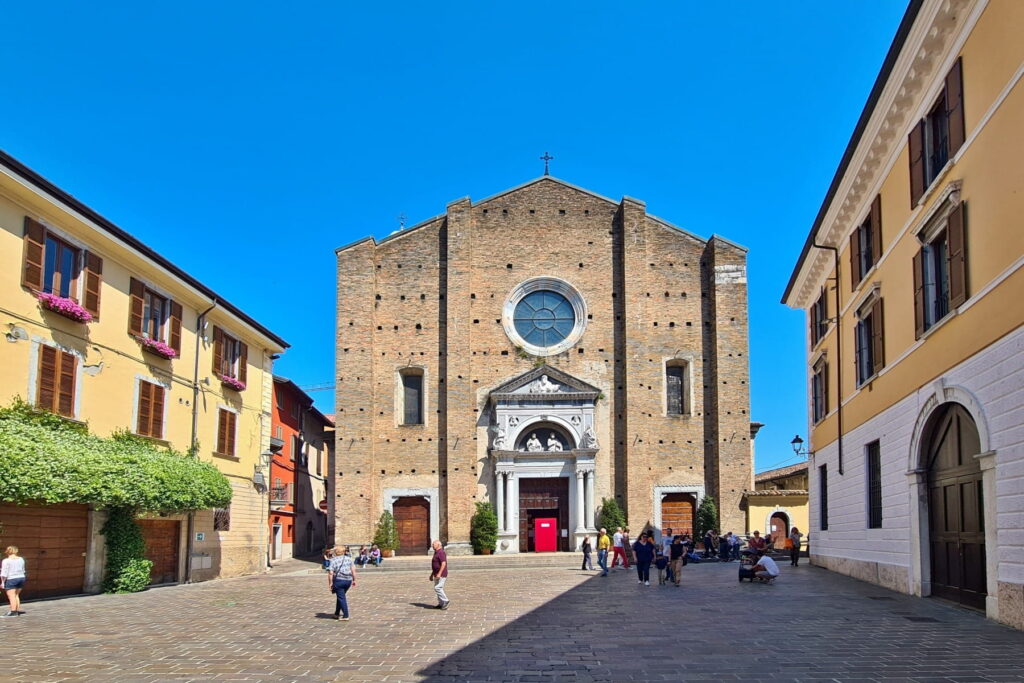
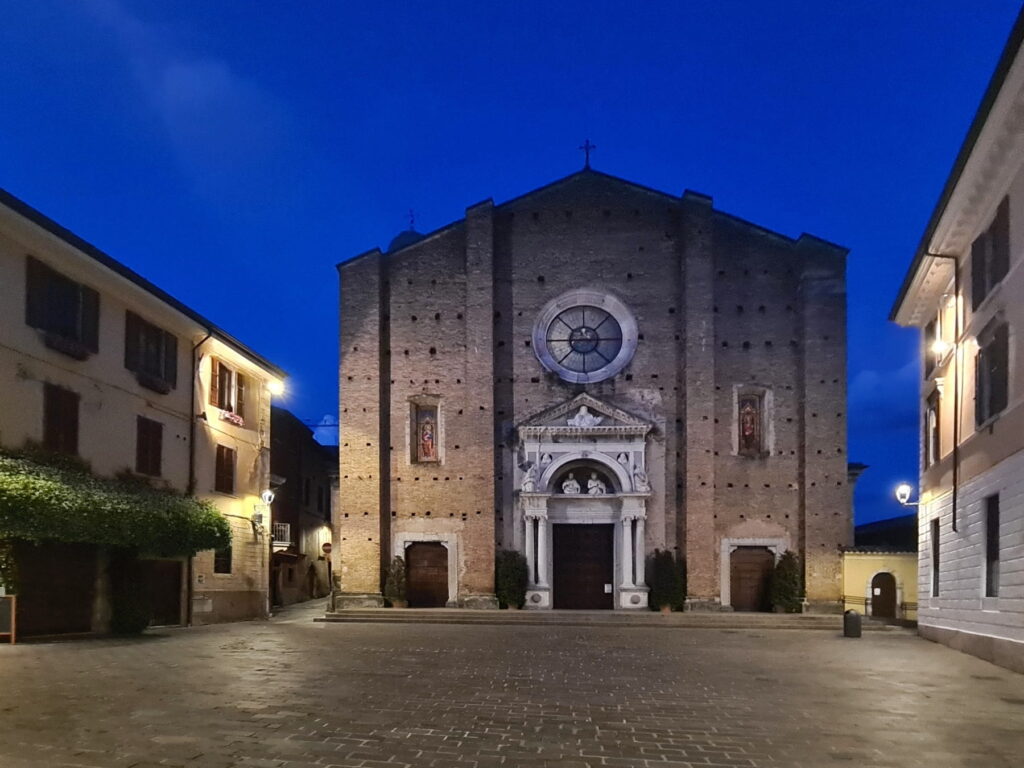
The Duomo di Santa Maria Annunziata is the architectural heart of Salò, standing as the most significant religious structure on the shores of Lake Garda. This late-Gothic cathedral serves as a testament to the town’s historical importance in Lombardy, offering visitors a blend of solemn Renaissance art and impressive scale that feels far removed from the typical tourist crowds. Whether you are drawn by the intricate artwork inside or the cool, quiet atmosphere of its nave, the cathedral is a central part of any visit to this lakeside town.
Why visit
The primary reason to visit this cathedral is its deceptive simplicity. From the outside, the unfinished brick facade might appear modest, yet it hides one of the most richly decorated interiors in the region. The transition from the bright, sunlit streets of Salò into the dim, vast space of the Duomo provides an immediate sense of the history that has unfolded here since the cornerstone was laid in 1443. It is a place where you can see the influence of various eras, from Gothic structural elements to Renaissance decorative flourishes.
Unlike many grand Italian cathedrals that can feel like museums, the Duomo di Santa Maria Annunziata remains deeply integrated into the local community. You will often see residents stopping in for a brief moment of reflection, giving the space a lived-in, authentic atmosphere. The quality of the artwork, including pieces by Zenale and Romanino, is exceptional, providing a high-level cultural experience without the commercial pressure or long security lines found in larger cities like Milan or Verona.
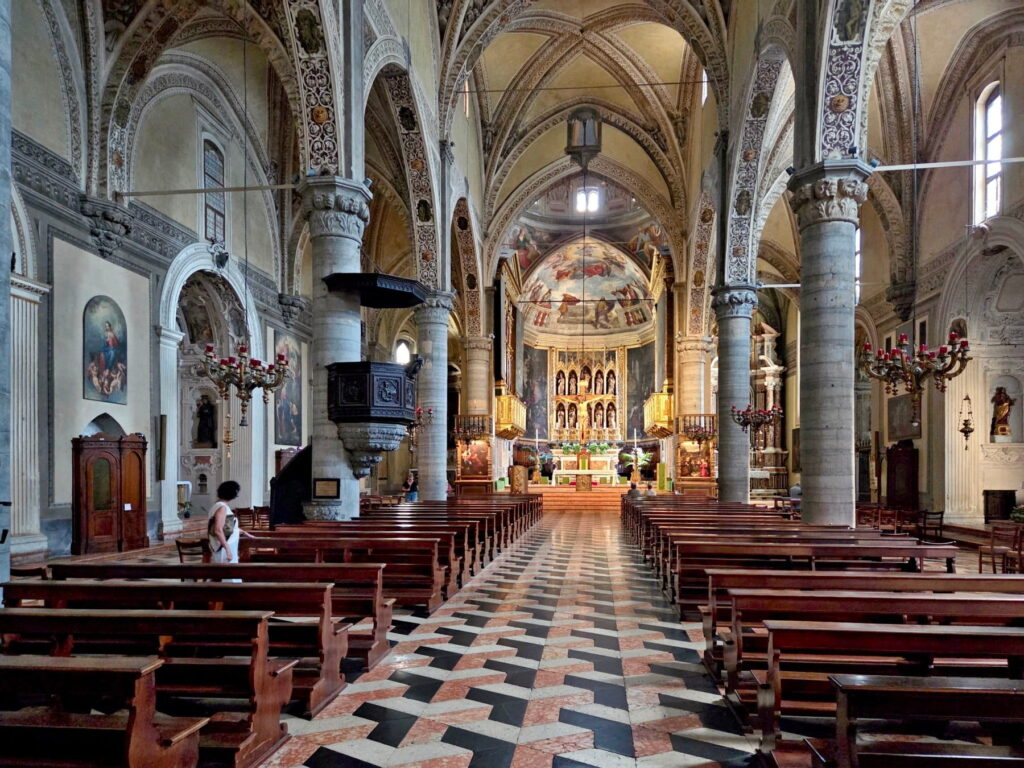
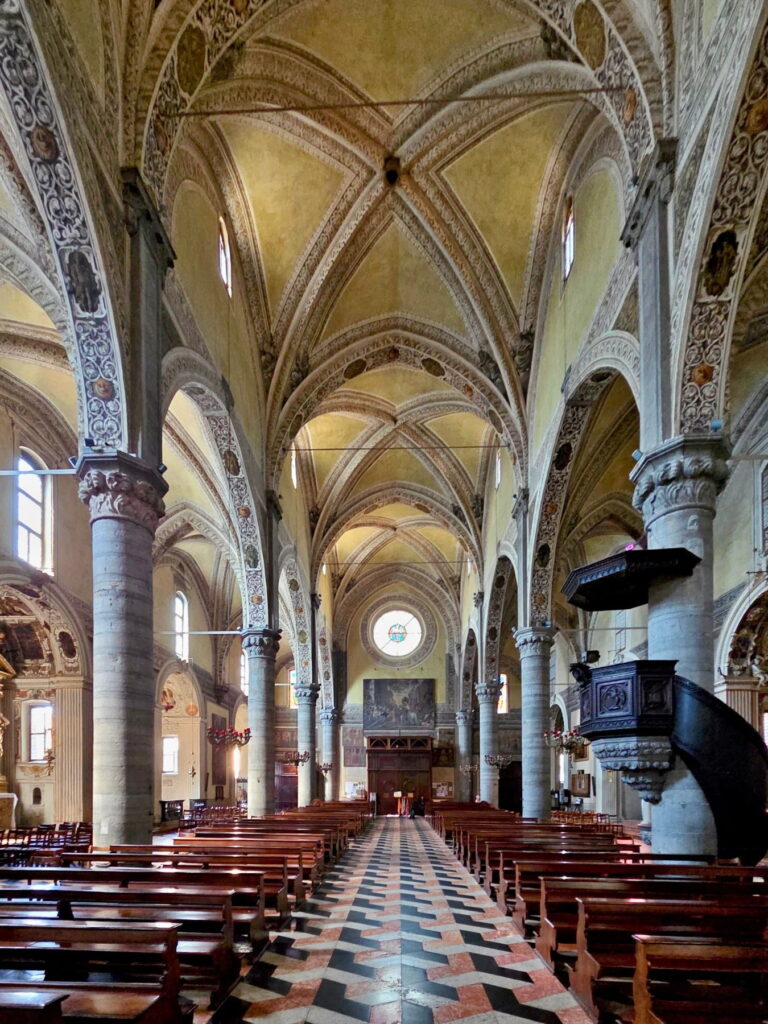
For those with an eye for detail, the cathedral offers layers of discovery. The floor alone is a masterpiece of perspective, featuring a complex three-dimensional marble pattern that can be quite disorienting if you stare at it too long. This level of craftsmanship, combined with the lack of entry fees, makes it an accessible yet profound stop for anyone exploring the Lombardy region.
What to see and highlights
- The Unfinished Facade: The exterior remains largely in its 15th-century state, showing the raw brickwork and the grand portal that hints at the scale of the interior.
- The 3D Marble Floor: One of the most striking features is the polychrome marble pavement, designed to create a vivid optical illusion of depth and geometric complexity.
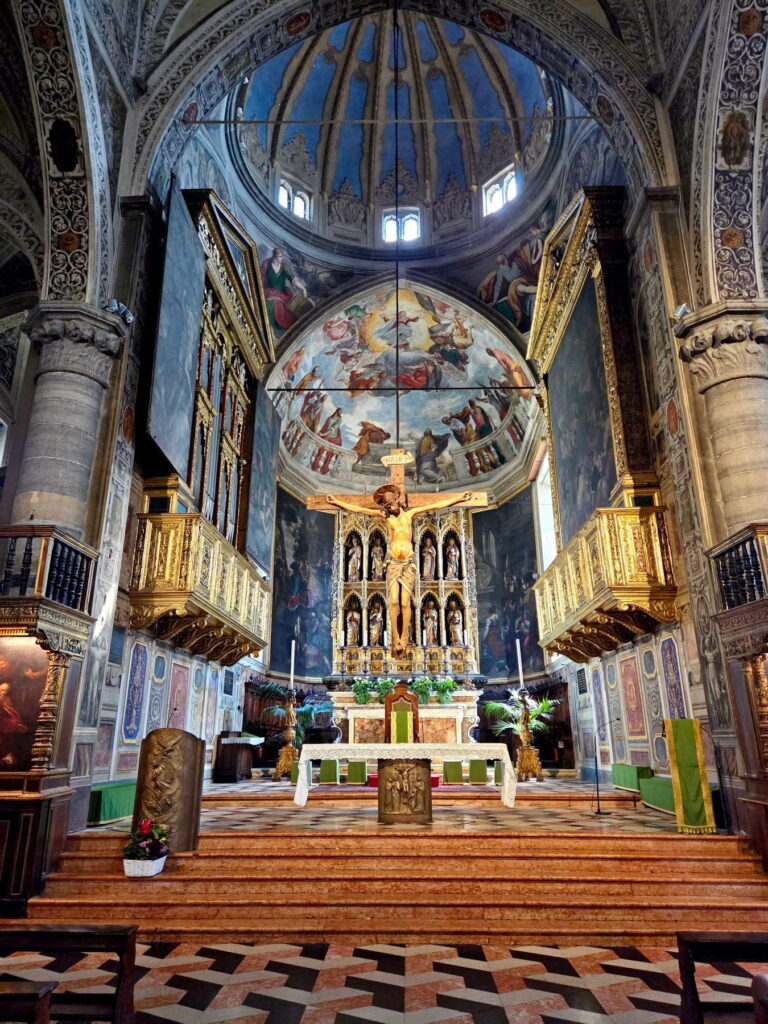
- Renaissance Masterpieces: The cathedral houses significant works of art, most notably the polyptych by Paolo Veneziano and frescoes by Floriano Ferramola.
- The Main Altar: A towering example of gilded woodwork and sculpture, the altar serves as the focal point of the cathedral’s spiritual and artistic life.
- The Organ: An impressive historical instrument that is still used during liturgical celebrations and occasional concerts, filling the vaulted space with incredible acoustics.
- Side Chapels: Each chapel along the aisles contains unique dedications and artworks, reflecting the patronage of Salò’s historical elite.
Practical information
The Duomo di Santa Maria Annunziata is located in the center of Salò, just a few steps back from the main lakeside promenade. It is easily accessible on foot from any point in the historic center.
- Location: Piazza Duomo, 25087 Salò BS, Italy.
- Parking: Finding a spot can be tricky. Use Parcheggio Stazione (Via della Rocchetta 12) for the quickest access to the center (GPS 45.607496, 10.524623). For the marina area, use Parcheggio coperto pubblico (Via Leonesio Marco 3 – GPS 45.603453, 10.518312).
- Time Needed: A thorough visit to admire the artwork and the architecture typically takes 30 to 45 minutes.
- Opening Hours: Generally open daily from morning until early evening, though it typically closes for a few hours during the midday “riposo.”
- Fees: Entry to the cathedral is free, though donations for maintenance are welcomed.
Tips for visitors
To experience the cathedral at its best, try to visit in the morning or late afternoon. The light filtering through the high windows during these times highlights the texture of the frescoes and the patterns on the floor without the glare of the midday sun. Because this is an active place of worship, it is important to dress respectfully, covering shoulders and knees.
If you are looking to avoid crowds, midweek visits are ideal. While Salò is generally calmer than towns on the southern end of Lake Garda, weekends can bring in more local visitors. If you happen to be in town during a religious holiday, the cathedral is often beautifully lit and hosts choral music, which enhances the atmosphere significantly. Lastly, always check the door for posted signs regarding mass times; tourists are discouraged from wandering around with cameras during active services to maintain the sanctity of the environment.
Nearby places
- Lungolago Zanardelli: A scenic lakeside promenade perfect for a post-cathedral stroll, lined with cafes and offering views of the bay.
- Piazza Vittorio Emanuele II: The town’s main gateway square, featuring a clock tower and acting as a hub for local life.
- Palazzo della Magnifica Patria: A historic government building that showcases the political importance Salò once held under Venetian rule.
- MuSa – Museo di Salò: A local museum that provides deeper historical context about the town, including its art and its role in 20th-century history.
- Historic Center: A maze of narrow alleys and boutiques that surround the cathedral, ideal for getting lost in the local atmosphere.
- The Marina: The northern end of the waterfront where you can watch the boats and enjoy a quieter side of the lake.
How to Visit and Combine This Place
The Duomo should be the cultural anchor of your day in Salò. A practical way to organize your visit is to start at the MuSa – Museo di Salò in the morning to understand the town’s history, then head to the cathedral before it closes for the afternoon break. Combining these sites provides a much fuller picture of why Salò looks the way it does today.
Because the cathedral is located so close to the Lungolago Zanardelli, it is easy to transition from a cultural visit to a relaxed lunch by the water. If you are interested in a more structured experience, consider a guided walking tour of the Historic Center. A guide can often point out subtle details on the cathedral’s exterior and within the Palazzo della Magnifica Patria that are easily missed when walking alone. Planning your visit around the ferry schedule is also a smart move if you are staying in another town on Lake Garda, as the walk from the dock to the Duomo is very short.
Is It Worth Visiting?
The Duomo di Santa Maria Annunziata is absolutely worth a visit, especially for those who appreciate art history and architecture without the typical tourist fanfare. It is a beautiful cathedral that offers a sense of scale and artistic density that you might not expect from a town of this size. While it may not have the fame of the cathedrals in Milan or Florence, its quiet dignity and the quality of its Renaissance interiors make it a highlight of the Lombardy region. It will most appeal to travelers who enjoy slow exploration and authentic cultural heritage.