
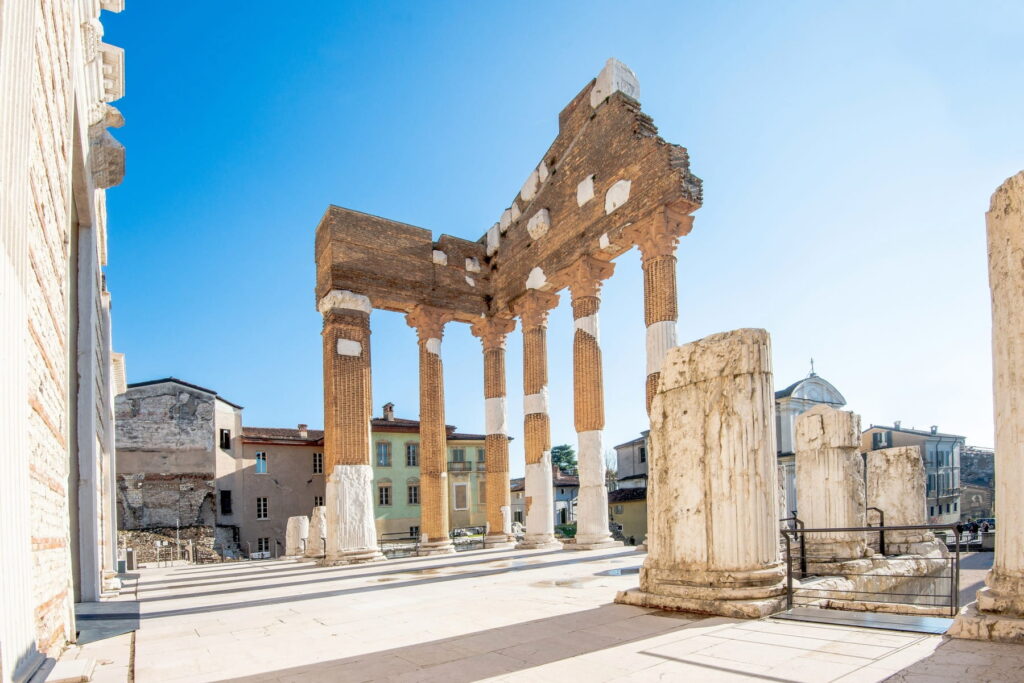
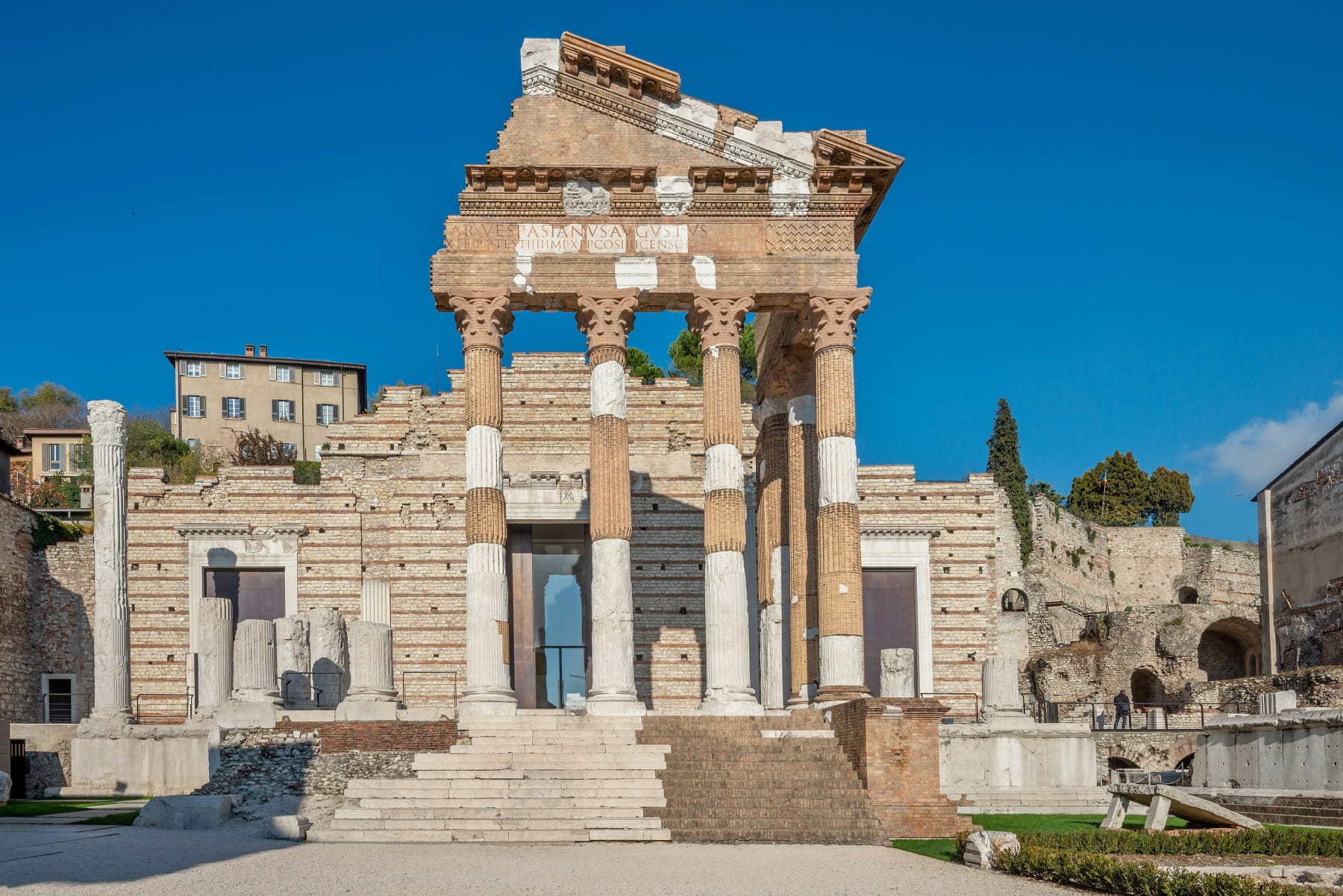
The Tempio Capitolino, or Capitolium, stands as the most significant archaeological complex in Brescia and a vital remnant of Roman civilization in northern Italy. Located along the ancient Via Musei, this temple was once the religious center of the Roman city of Brixia and today offers a clear window into the imperial past of the region. Visitors come here to see the impressive reconstruction of the Corinthian columns and to explore the underground chambers that have survived nearly two thousand years of urban change.
Why visit
The primary reason to visit the Capitolium is to witness one of the few places in Italy where Roman architecture is so well-integrated into a modern city layout. Unlike many ruins that require a leap of imagination, the Capitolium features a partial 19th-century reconstruction using original materials, which helps you visualize the scale and grandeur of the Roman Empire’s influence in Lombardy. The site is a central part of a UNESCO World Heritage listing, marking its importance alongside the nearby Santa Giulia Museum.
Beyond the stone and marble, the site is home to the Winged Victory (Vittoria Alata), a world-renowned Roman bronze statue. Finding such a high-quality bronze in its original city of discovery is rare, as many such artifacts were melted down or moved to national museums centuries ago. The temple provides a localized, intimate look at Roman devotion and civic pride without the overwhelming crowds found at the Forum in Rome.
The complex also serves as a gateway to understanding how Brescia evolved. By standing at the base of the temple, you can see the layers of history stretching from the Roman Republic through the Flavian dynasty, up to the medieval fortifications of Brescia Castle which looms on the hill directly above the ruins. It is a site that rewards those who appreciate architectural detail and the quiet persistence of history.
What to see and highlights
- The Triple Cella: The temple is divided into three distinct chambers, originally dedicated to the Capitoline Triad: Jupiter, Juno, and Minerva. Inside, you can still see the original colored marble floors, which are remarkably well-preserved.
- The Winged Victory: This bronze masterpiece is the centerpiece of the museum section. After a meticulous restoration, it is displayed in a way that highlights its craftsmanship and the technical skill of Roman sculptors.
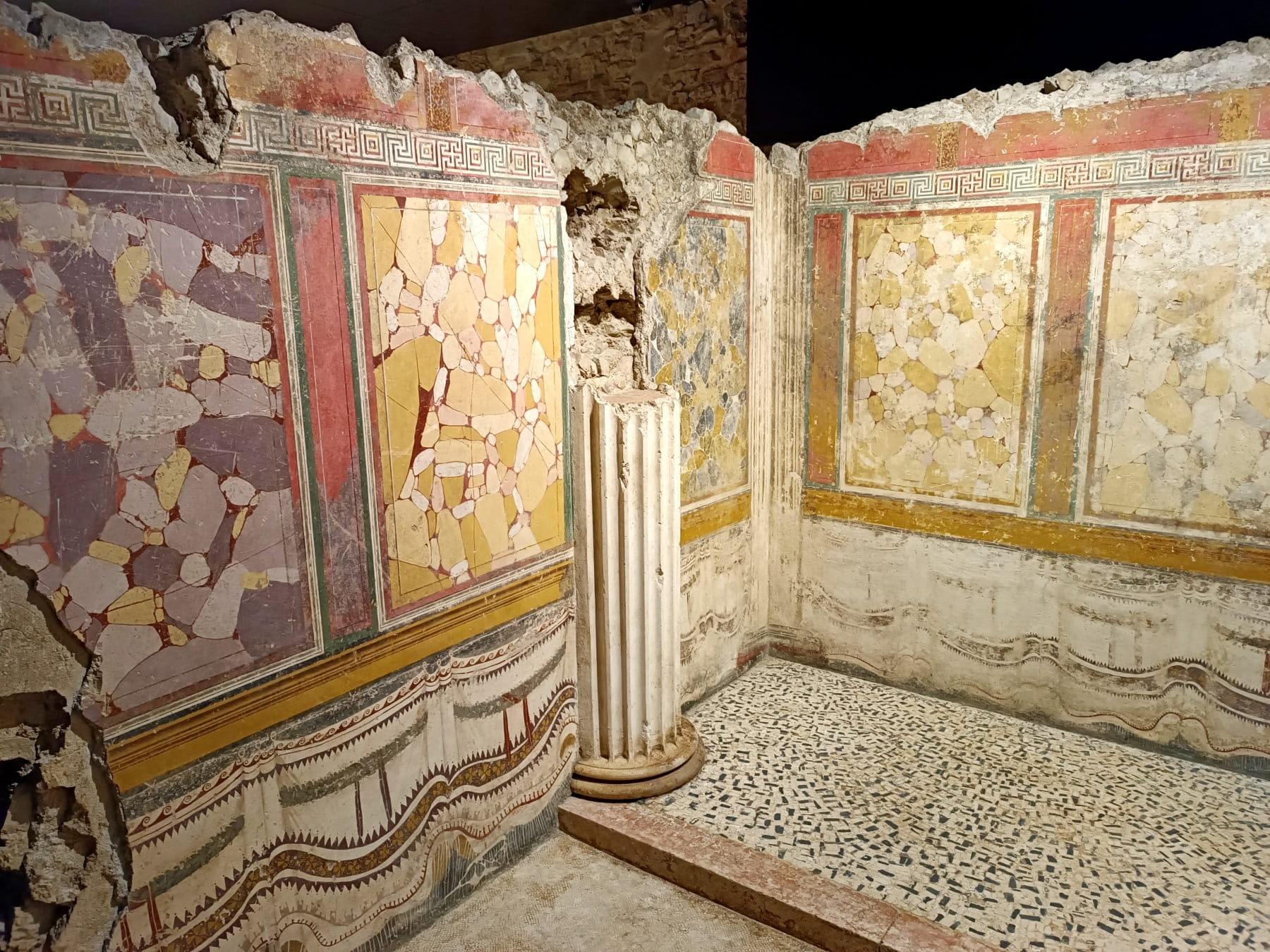
- The Republican Sanctuary: Located beneath the main temple, these older chambers contain frescoes that date back to the 1st century BC. The geometric patterns and colors offer a glimpse into the aesthetic tastes of the Roman Republic.
- Roman Theater remains: Just a short walk from the temple’s main stairs are the remnants of a massive theater that once held thousands of spectators. Though partially covered by later buildings, its curved footprint is still easily visible.
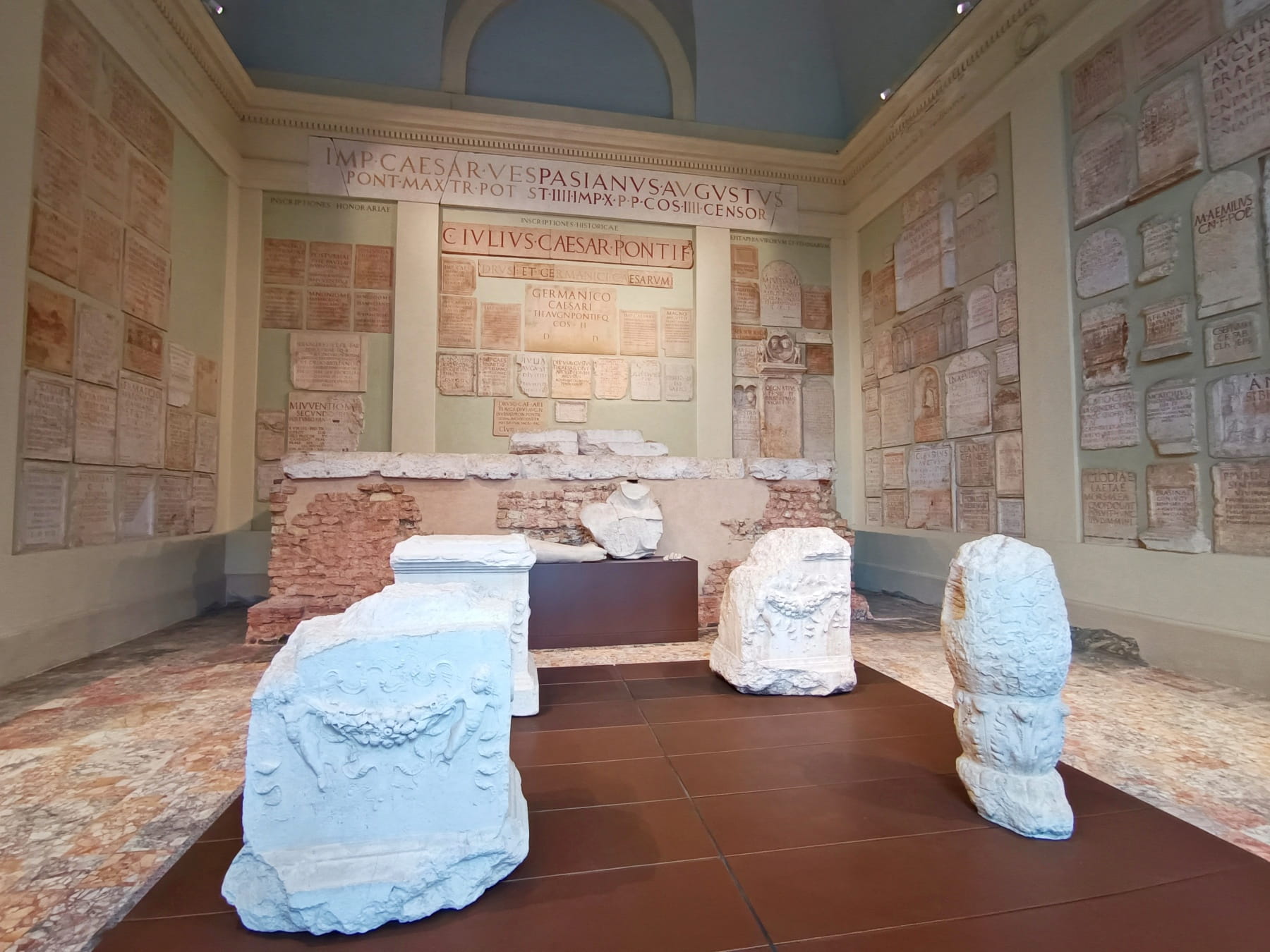
- The Inscriptions: Scattered around the courtyard and the temple walls are numerous Latin inscriptions. These stone records provide names of local citizens, officials, and emperors, grounding the grand architecture in the lives of real people.
Practical information
The Tempio Capitolino is located in the historic center of Brescia on Via Musei. It is part of the “Brixia: Archaeological Park of Roman Brescia” and is easily reachable on foot from any central point in the city.
- Accessibility: The site is largely accessible, though the ancient stones can be uneven. There are ramps and elevators to ensure visitors can reach the underground sanctuaries and the main temple level.
- Parking: The city center is largely a restricted traffic zone (ZTL). If you are driving, it is best to park at the Arnaldo parking garage and walk approximately 10 minutes to the site.
- Time Needed: A thorough visit to the temple, the Republican sanctuary, and the theater remains takes about 60 to 90 minutes. If you combine this with the Santa Giulia Museum, you should plan for at least 3 to 4 hours.
- You can find out more about Tempio Capitolino, including ticket prices, on the official website.
Tips for visitors
Book in advance: To ensure entry to the Republican sanctuary, which has limited capacity to protect the frescoes, it is highly recommended to book your tickets online before you arrive.
Notice the material contrast: When looking at the columns, you will see a mix of white marble and red brick. The marble is original Roman material found during excavations, while the brick was used in the 1800s to support the structure, creating a helpful visual distinction between the old and the “new.”
Visit at dusk: While the interior may be closed, the exterior of the Capitolium is beautifully illuminated in the evening. It provides a striking contrast to the surrounding medieval and Renaissance buildings, including the nearby Duomo Vecchio & Duomo Nuovo.
Wear comfortable shoes: The archaeological park involves walking on various surfaces, including ancient Roman paving stones and modern gravel. Sturdy footwear will make the experience much more pleasant.
Nearby places
- Brescia Castle: A sprawling medieval fortress on Cidneo Hill that offers panoramic views of the city and houses an impressive arms museum.
- The Levitating Rhinoceros: A modern and thought-provoking art installation located in the hanging gardens of the castle, providing a surreal contrast to the ancient stone surroundings.
- Duomo Vecchio & Duomo Nuovo: A rare architectural pairing of a circular 11th-century Romanesque cathedral and its grand 17th-century successor.
- Santa Giulia Museum: A former monastic complex turned museum that houses thousands of years of local history, including Roman houses with original mosaics.