
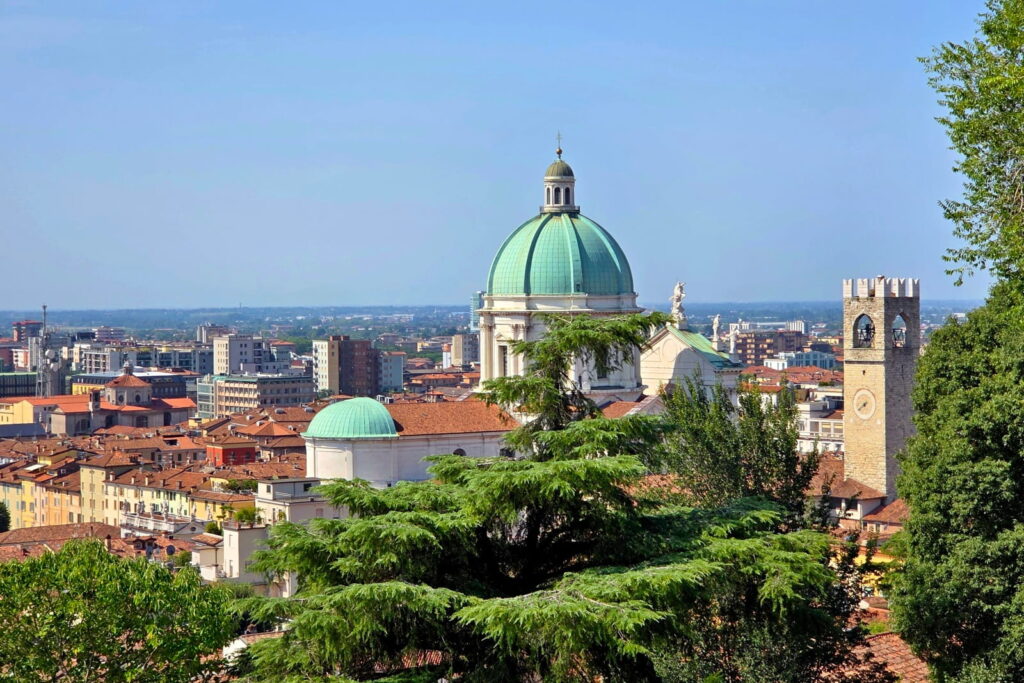
Brescia is something of a Cinderella, often overlooked in favor of its glitzy neighbor Milan or the romantic charm of Lake Garda. Although primarily known as Italy’s industrial hub, a stop here reveals a city of incredible architectural contrasts and deep historical layers. From Roman ruins and Rationalist squares to the medieval castle watching over it all, Brescia is a hidden gem that rewards curious travelers. One day is more than enough to soak up its unique atmosphere and taste the best of Lombard cuisine.
Top places to visit in Brescia
- Piazza della Vittoria – bold 1930s architecture
- Brescia Castle – best panoramic views
- Roman ruins (Capitolium) – ancient Brixia
- Duomo Vecchio & Duomo Nuovo – two cathedrals side by side
- Piazza della Loggia – historic heart of the city
Top 10 things to do in Brescia
- Piazza della Vittoria: Explore bold, monumental Italian Rationalist architecture.
- Castello di Brescia: Climb up for the best panoramic views of the city.
- Tempio Capitolino: Walk through the ruins of a Roman temple and forum.
- Santa Giulia Museum: Visit this UNESCO World Heritage site located in a former monastery complex.
- Duomo Vecchio: Admire the rare circular Romanesque “Old Cathedral”.
- Duomo Nuovo: Compare the old structure with the towering Late Baroque “New Cathedral”.
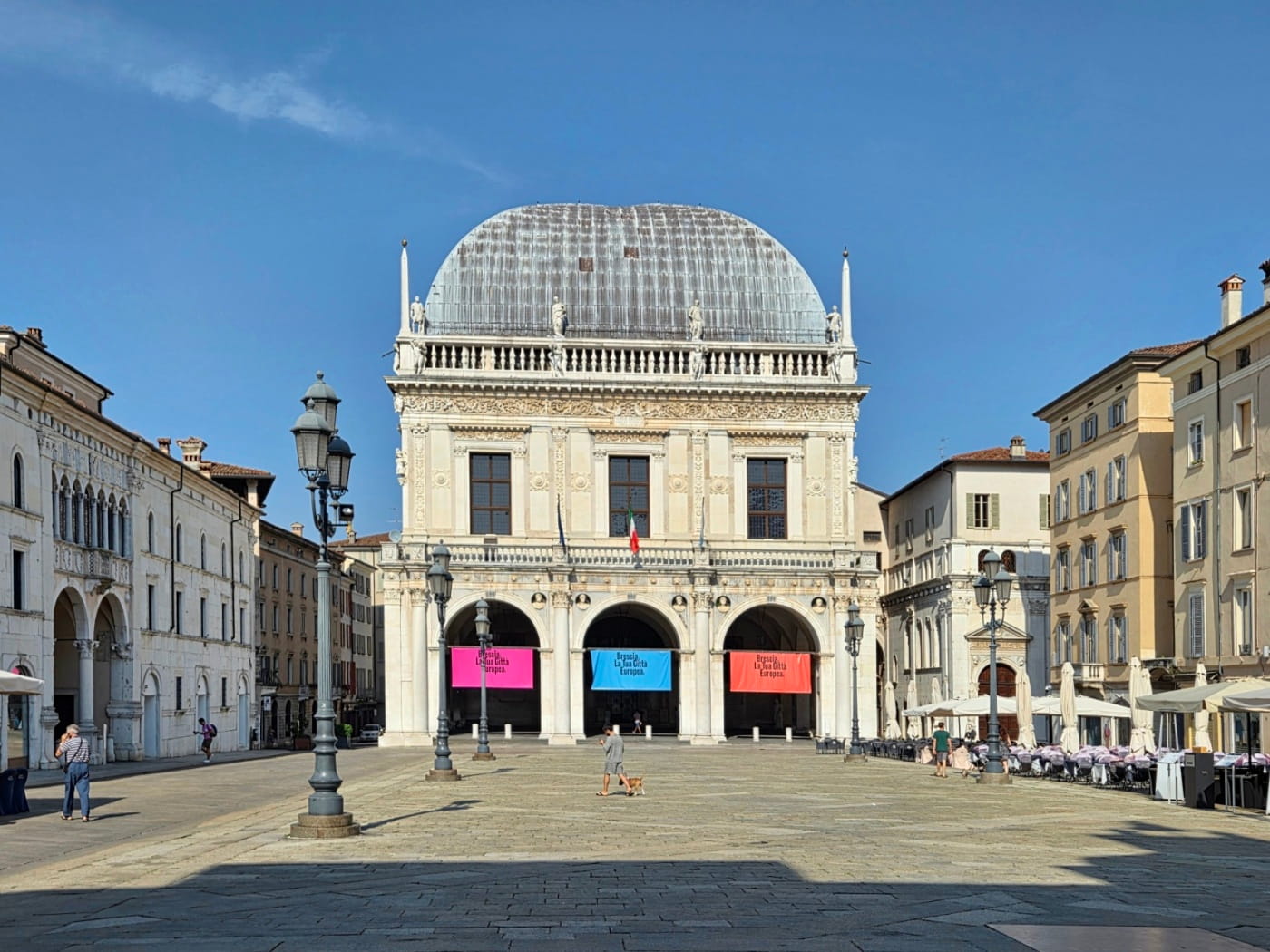
- Piazza della Loggia: Enjoy the beauty of the city’s most elegant Venetian-style square.
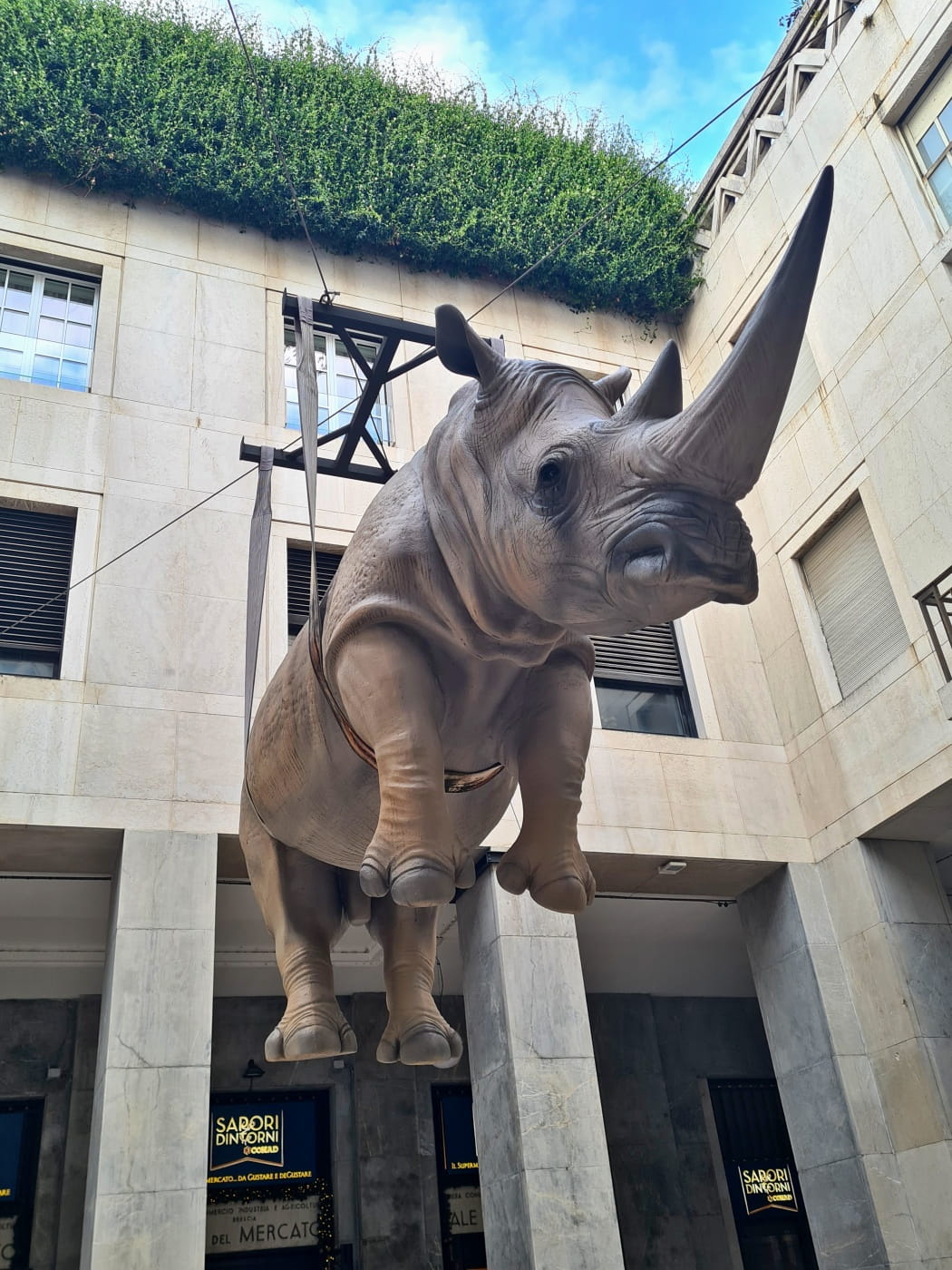
- The Levitating Rhinoceros: Find the bizarre modern sculpture hidden in a passage.
- Piazza Paolo VI: Relax with a cappuccino overlooking two side-by-side cathedrals.
Piazza della Vittoria and Poste e Telegrafi
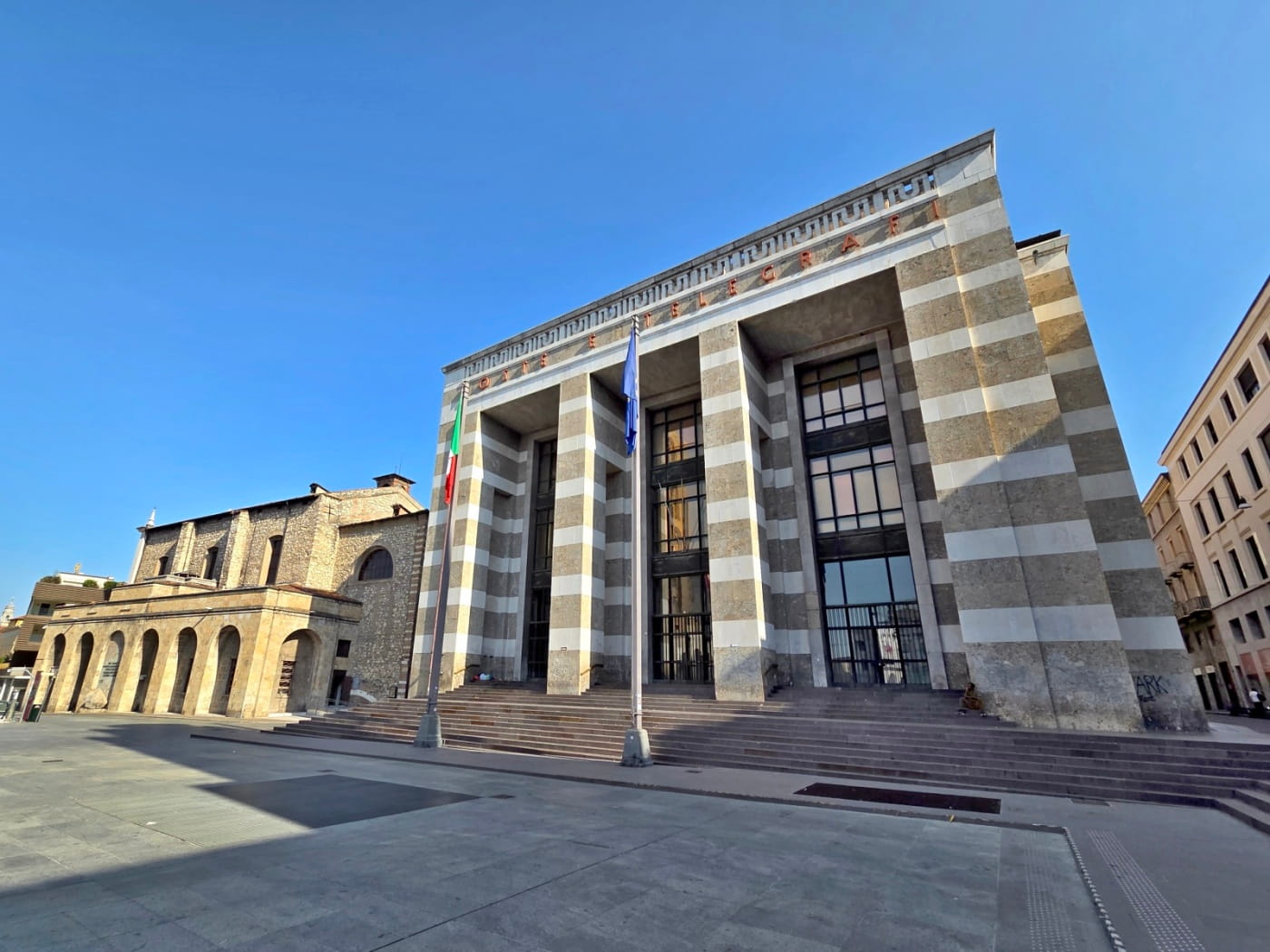
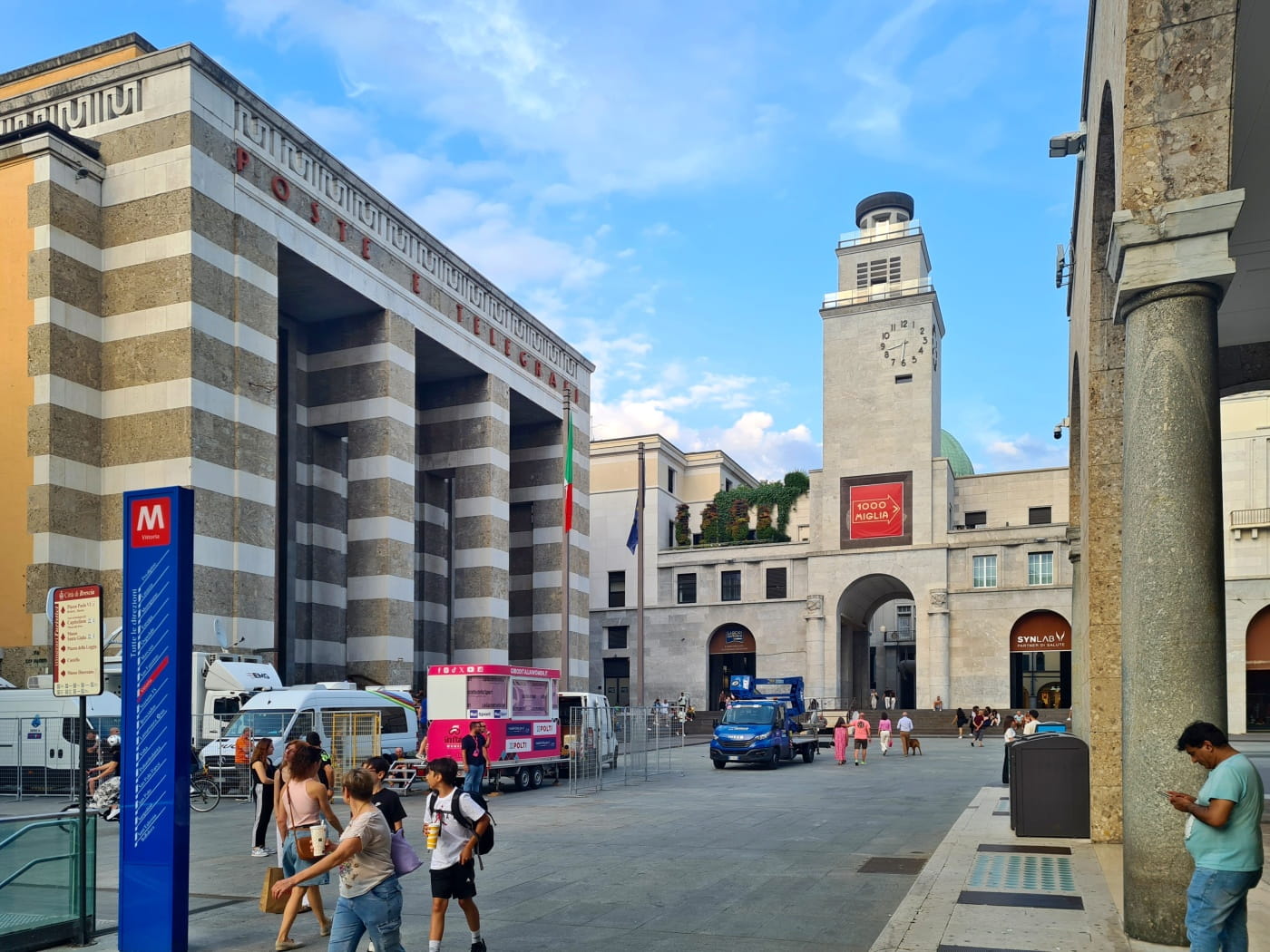
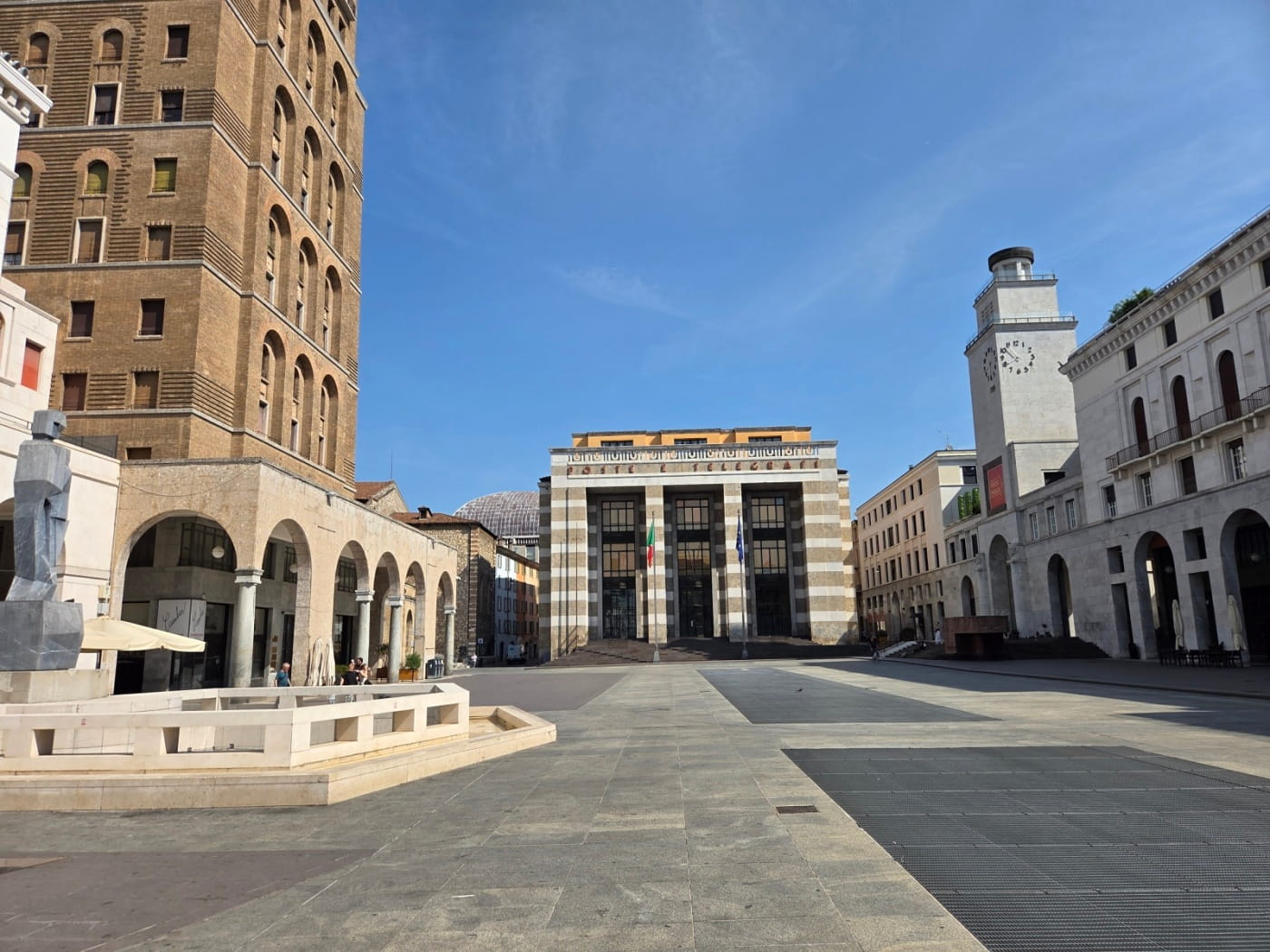
This square is a fascinating departure from typical “picturesque” Italian piazzas. Built in the 1930s under Mussolini, it is a prime example of Italian Rationalism. The architecture is austere, monumental, and intentionally imposing. The dominant building is the Poste e Telegrafi, showcasing the era’s obsession with clean lines and grand scale. For a deeper look, see our guide to Piazza della Vittoria.
- Why visit: It offers a rare, almost cinematic look at a controversial but architecturally significant period of Italian history.
- Tip: If arriving by car, park in the underground garage directly beneath this square. You will be right in the center and it serves as an excellent starting point.
Piazza Paolo VI (The Two Cathedrals)
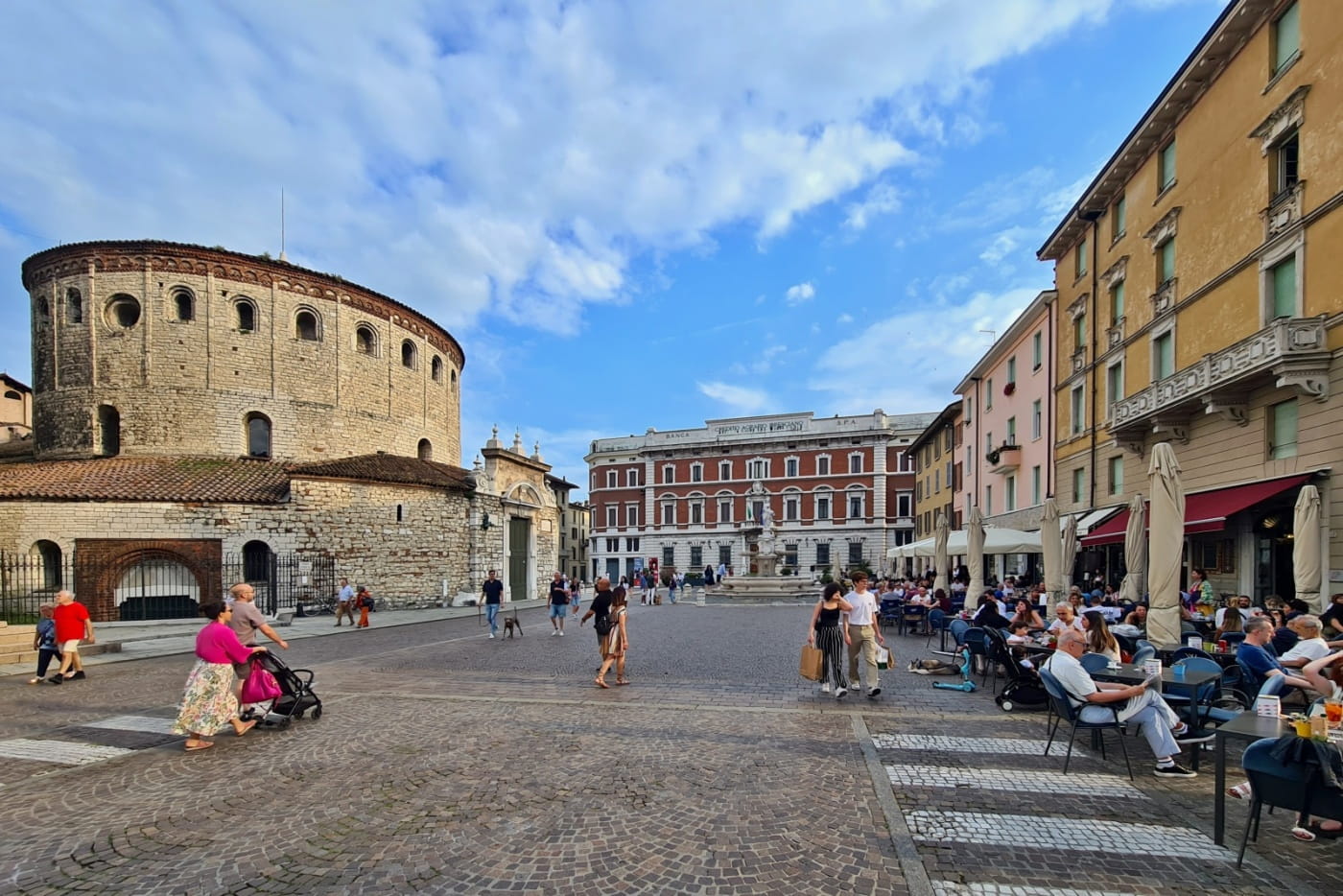
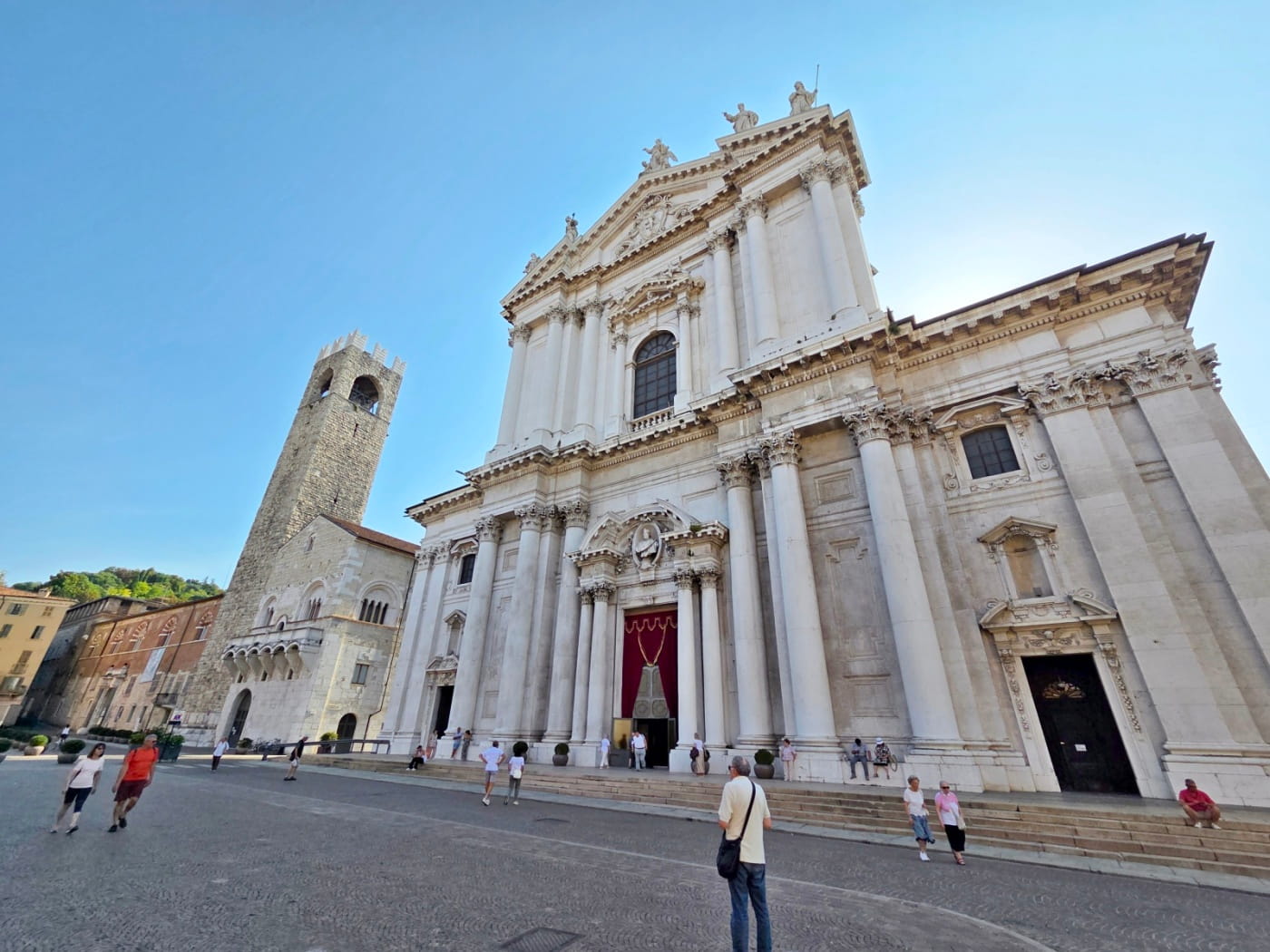
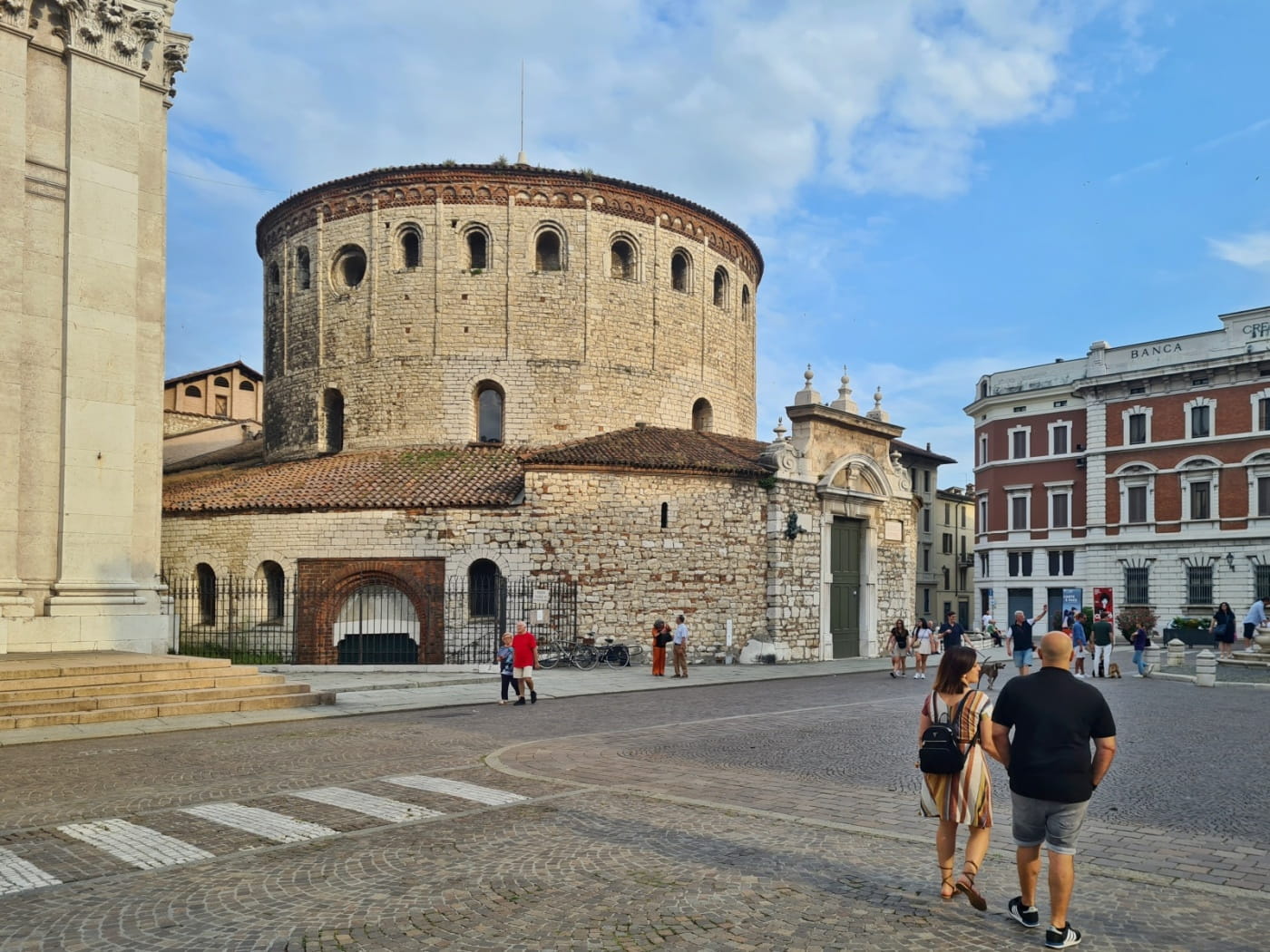
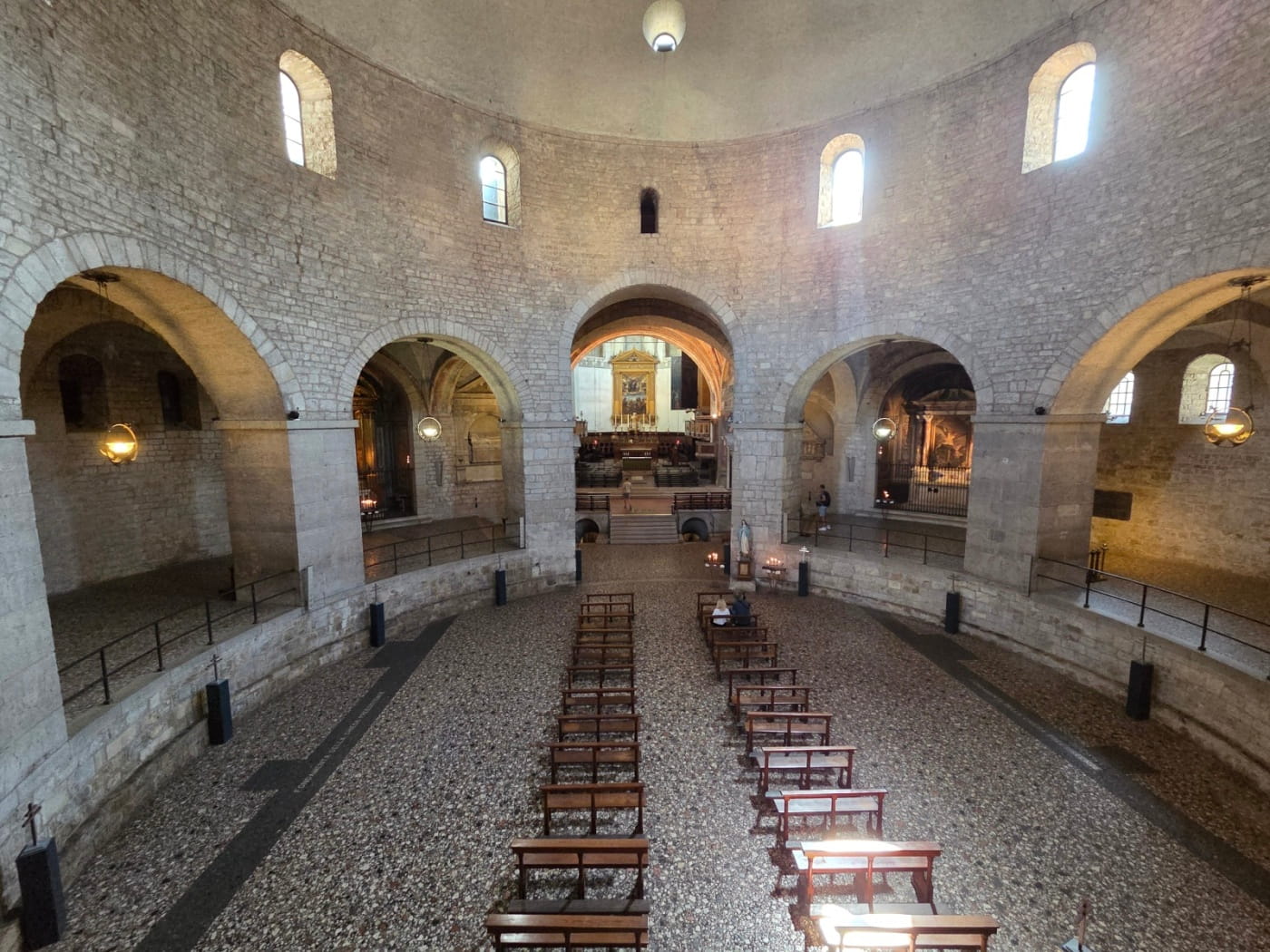
Just a short walk from the modern lines of Piazza Vittoria lies the historical heart of Brescia. This square is unique because two cathedrals stand directly next to each other: Duomo Vecchio (Old Cathedral) and Duomo Nuovo (New Cathedral). For a more in-depth look, see our guide to Piazza Paolo VI.
- Why visit: Duomo Vecchio is an 11th-century rotunda, a great rarity in Italy. The contrast between its rough stone and the towering white marble facade of the New Cathedral is breathtaking.
- Tip: Have an espresso or a glass of wine at one of the cafes on the square. Sitting there watching the sun hit the white marble of the Santa Maria Assunta cathedral is the quintessential Brescia experience.
“The Levitating Rhinoceros”
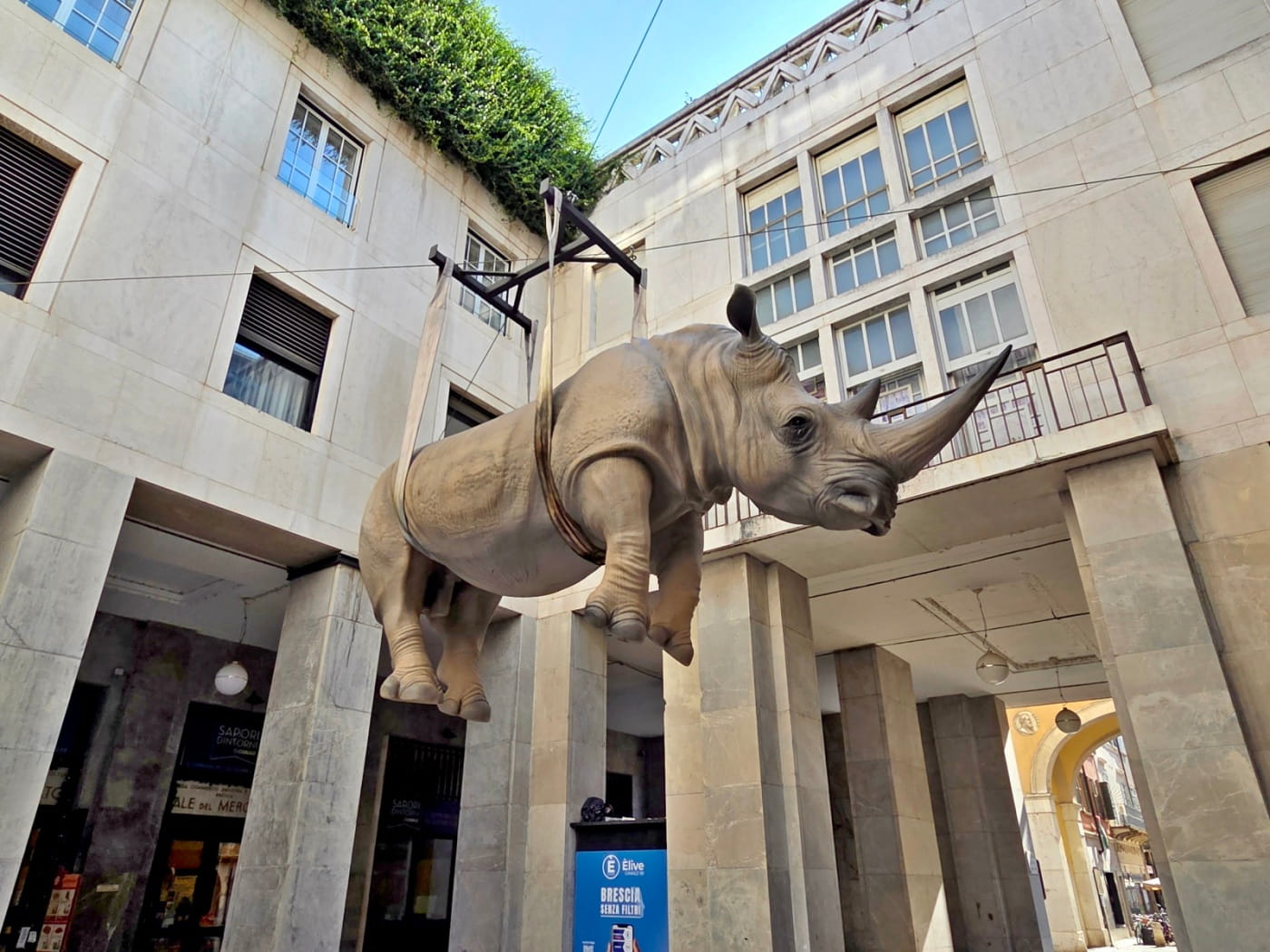
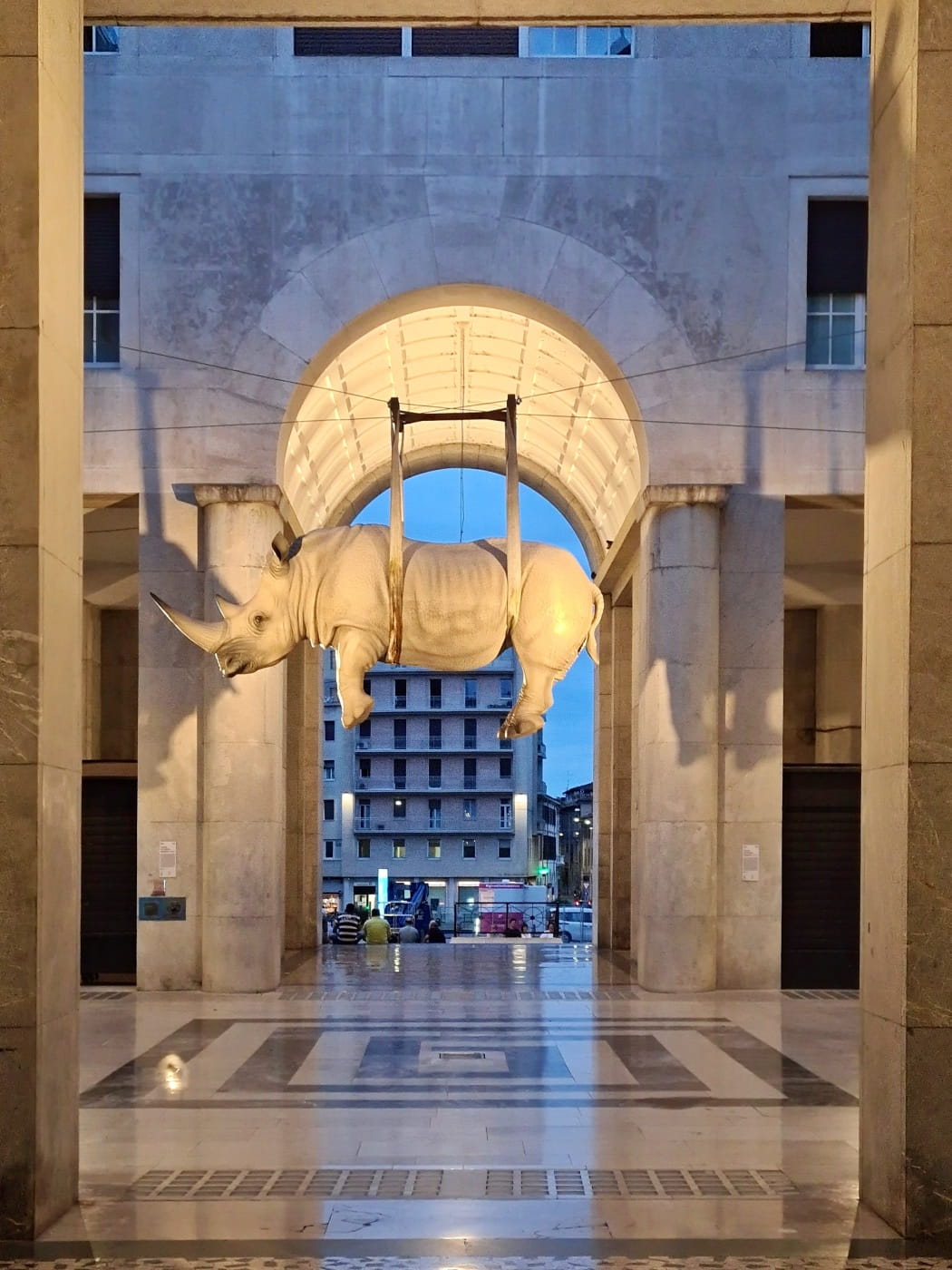
When moving between Piazza della Vittoria and Piazza Paolo VI, look up while passing through the short passage (galleria). There you will find a surprising piece of modern art: a life-sized suspended rhinoceros sculpture.
- Why visit: It is a witty, unexpected detail that most tourists walk under without noticing.
- Tip: It’s a great spot for an original photo to spice up traditional architectural shots.
Piazza della Loggia
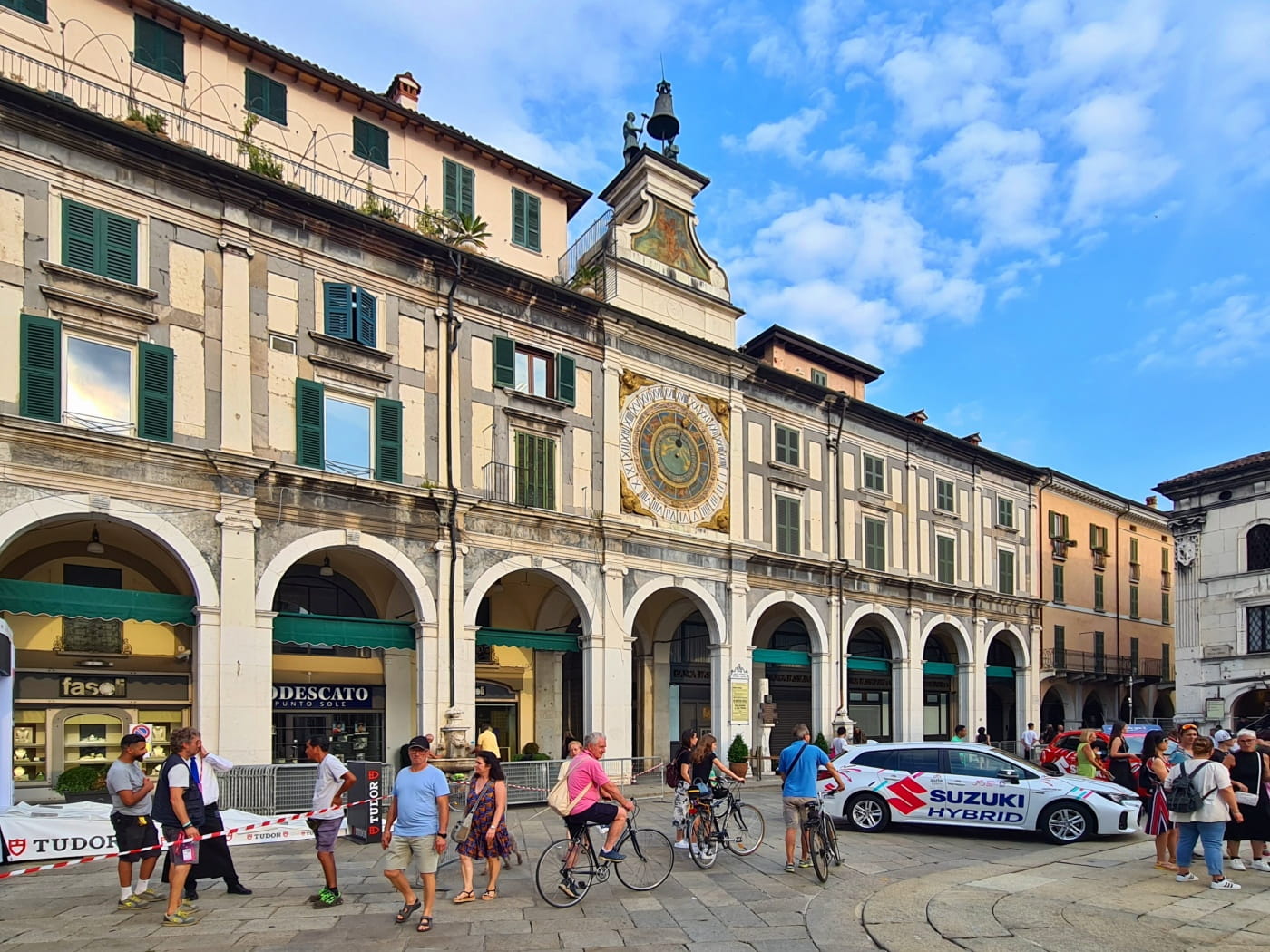
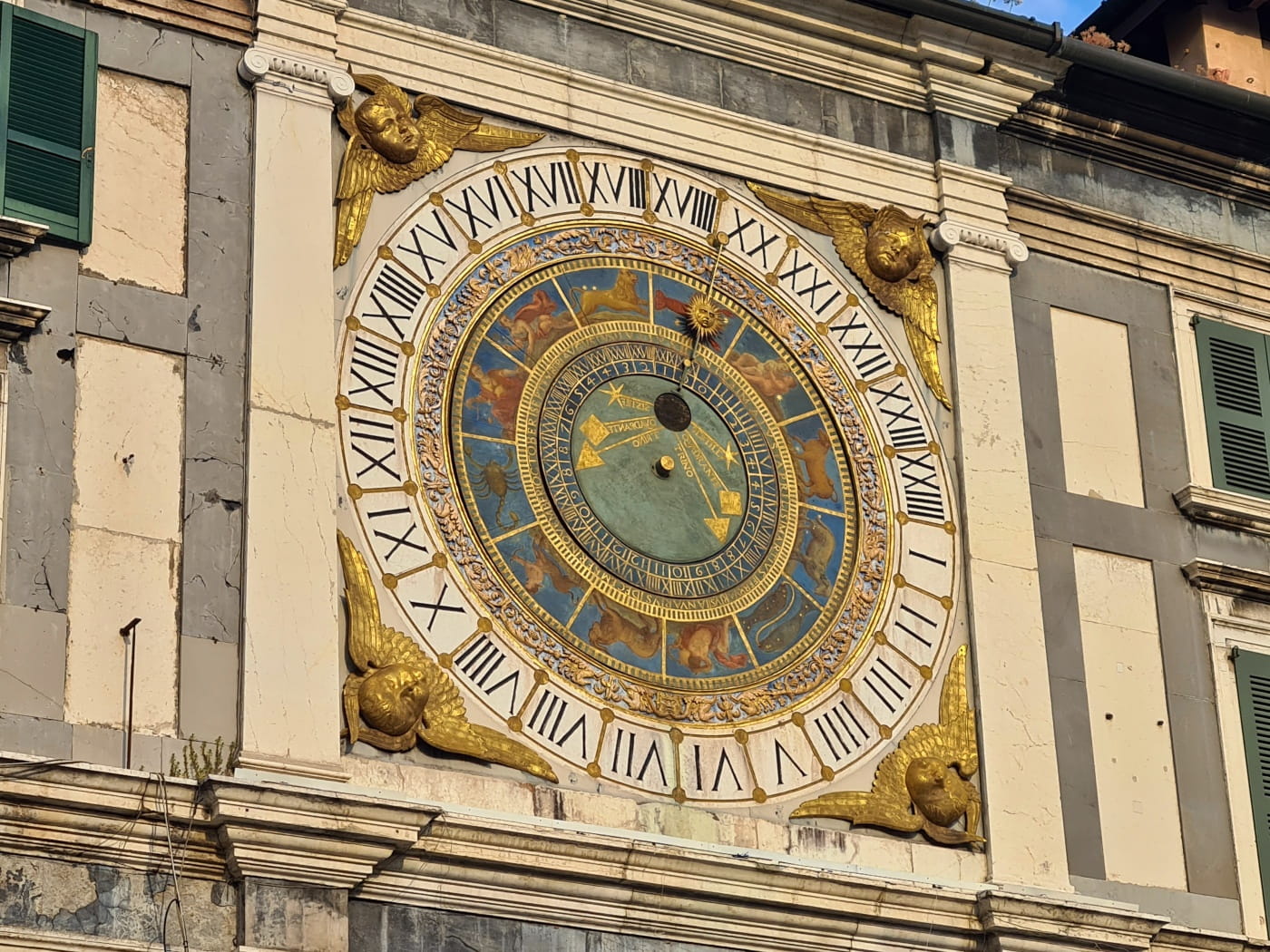
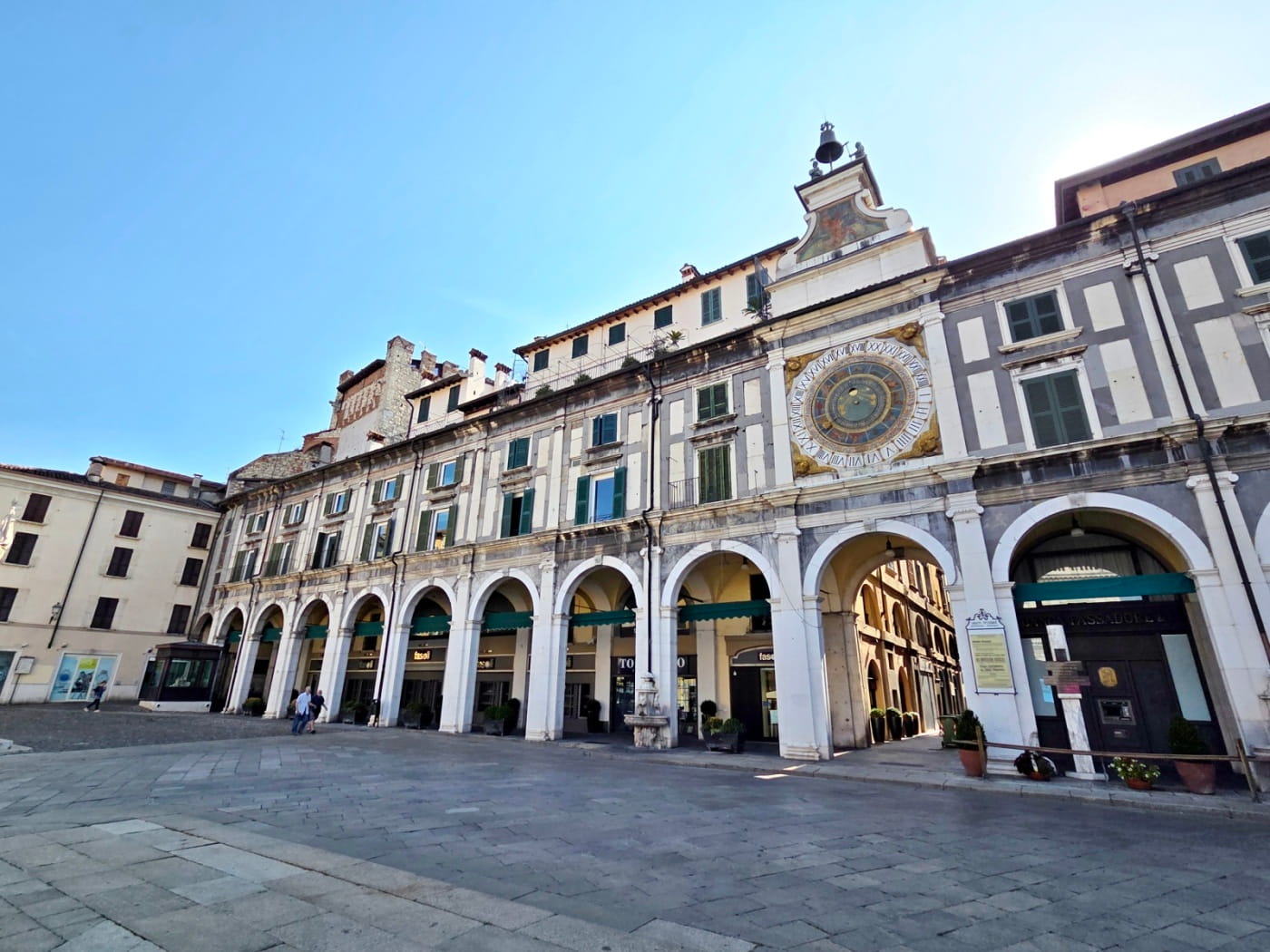
Considered the most beautiful square in Brescia, this location shows strong Venetian influence. The Palazzo della Loggia (Town Hall) is a masterpiece of Renaissance design, and the square also features a magnificent 16th-century astronomical clock. For a more in-depth look, see our guide to Piazza della Loggia.
- Why visit: It is the social heart of the city and arguably the “most Italian” spot in town.
- Tip: Watch the clock tower; the mechanical figures (called “Macc de le Ore”) still strike the bell every hour.
Capitolium and the Roman Forum
In Brescia (ancient Brixia), you will find one of the most significant Roman archaeological sites in Northern Italy. The Capitolium was the city’s main temple, and much of its original structure and floors have been preserved.
- Why visit: You will see history layered directly on top of itself. The Roman Forum feels like a “little Rome” without the stifling crowds.
- Tip: Even if you don’t go inside the museum, the view of the columns from the street with the city in the background is very impressive.
Castello di Brescia (Brescia Castle)
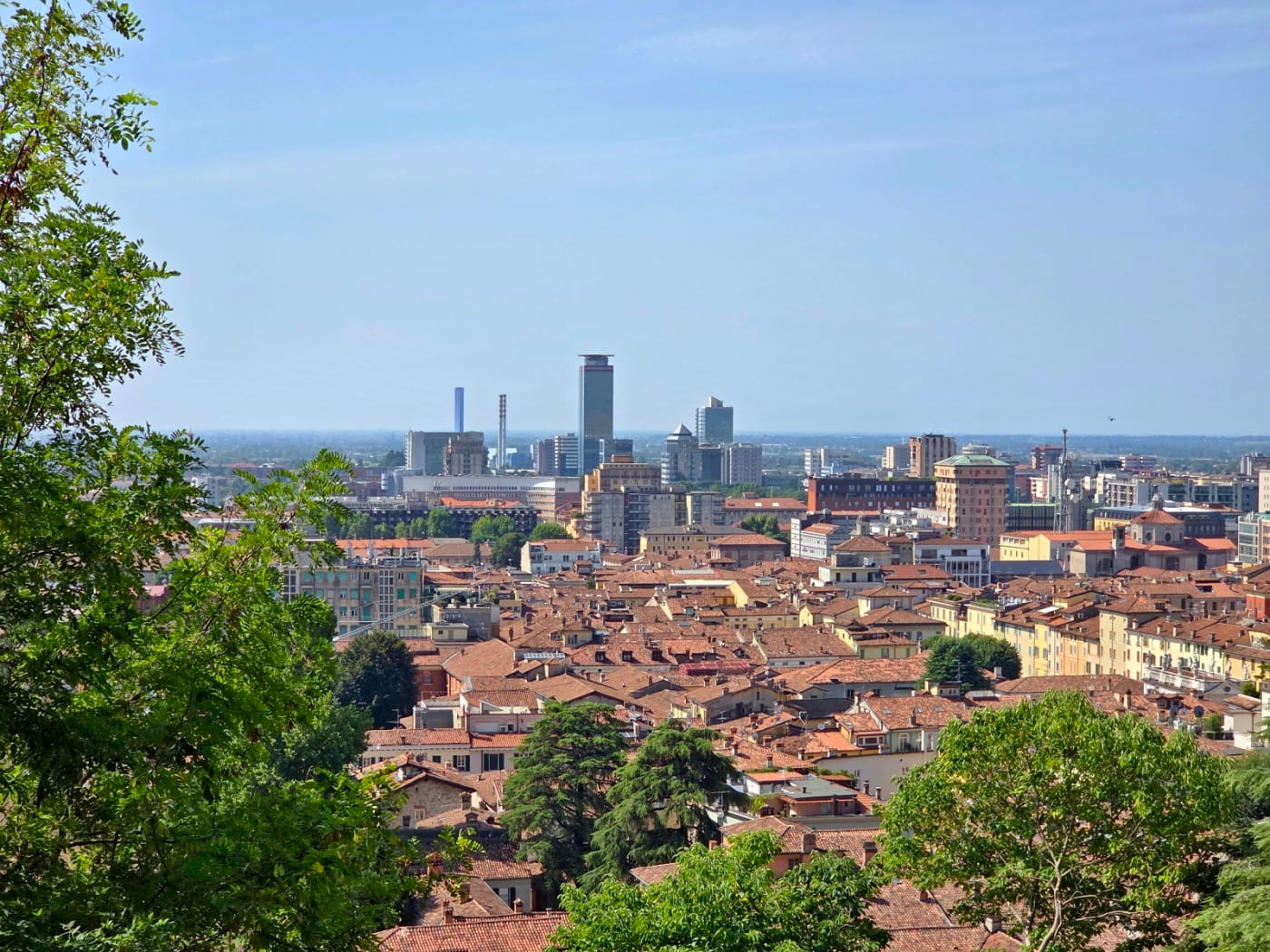
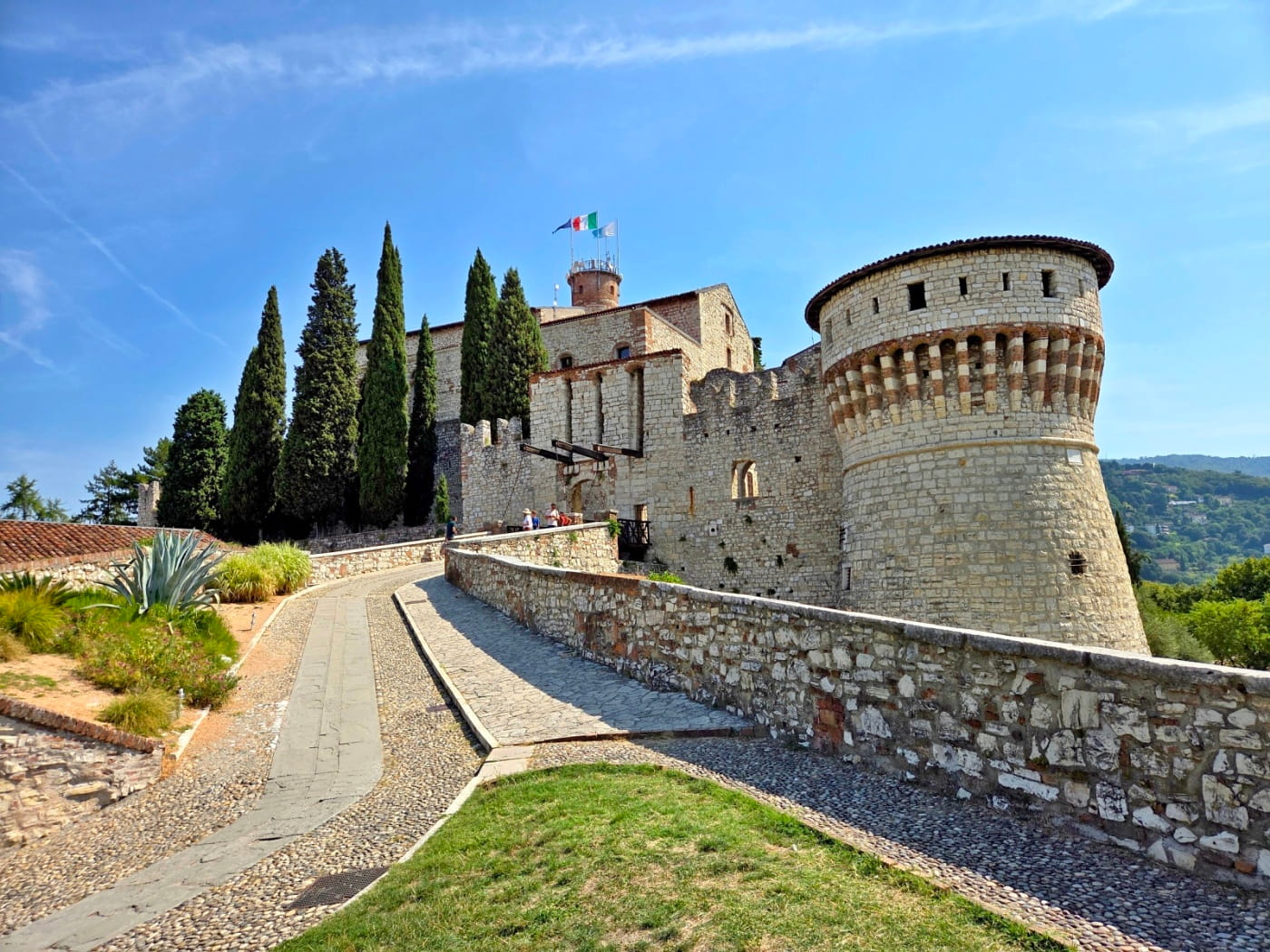
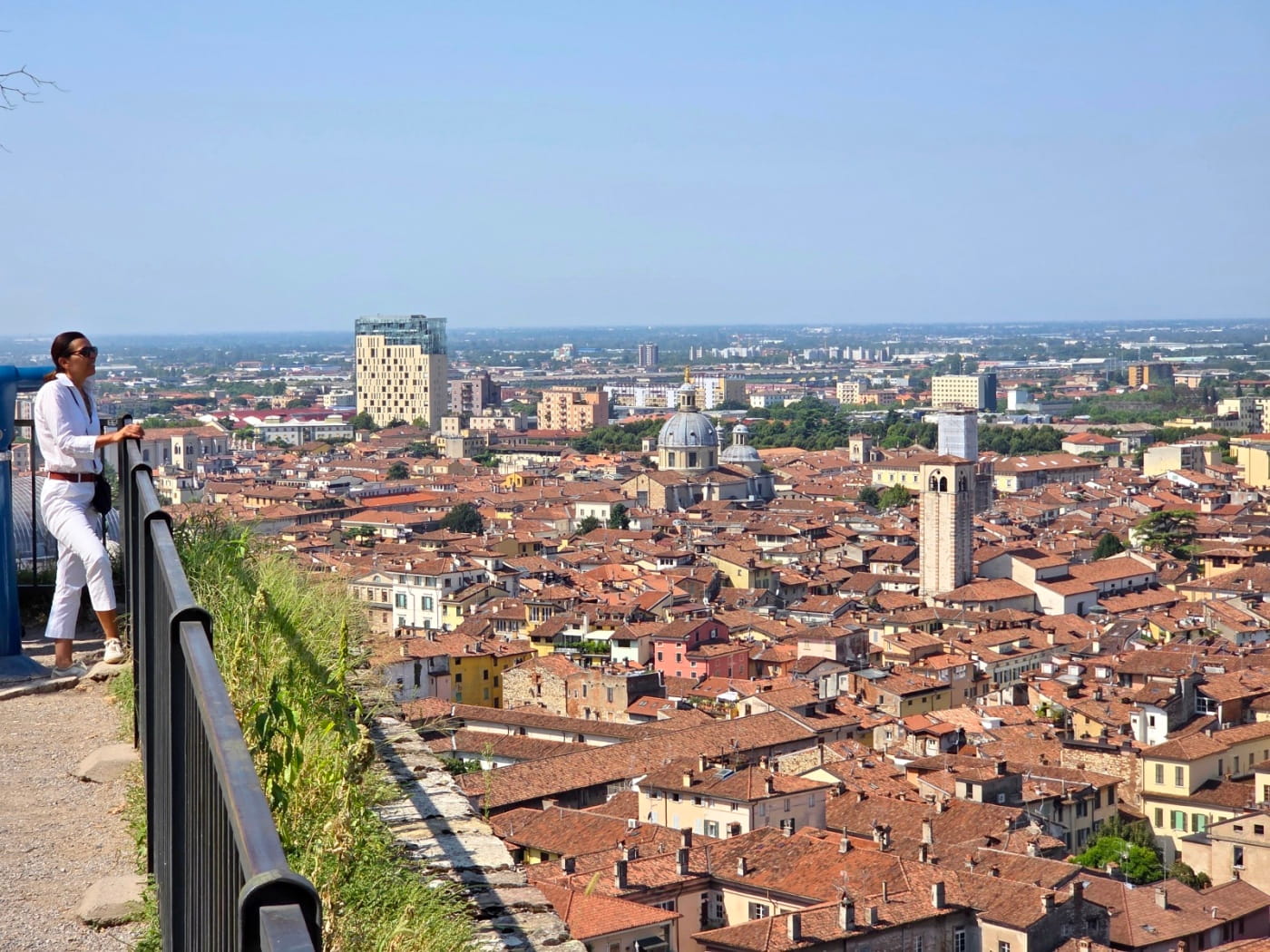
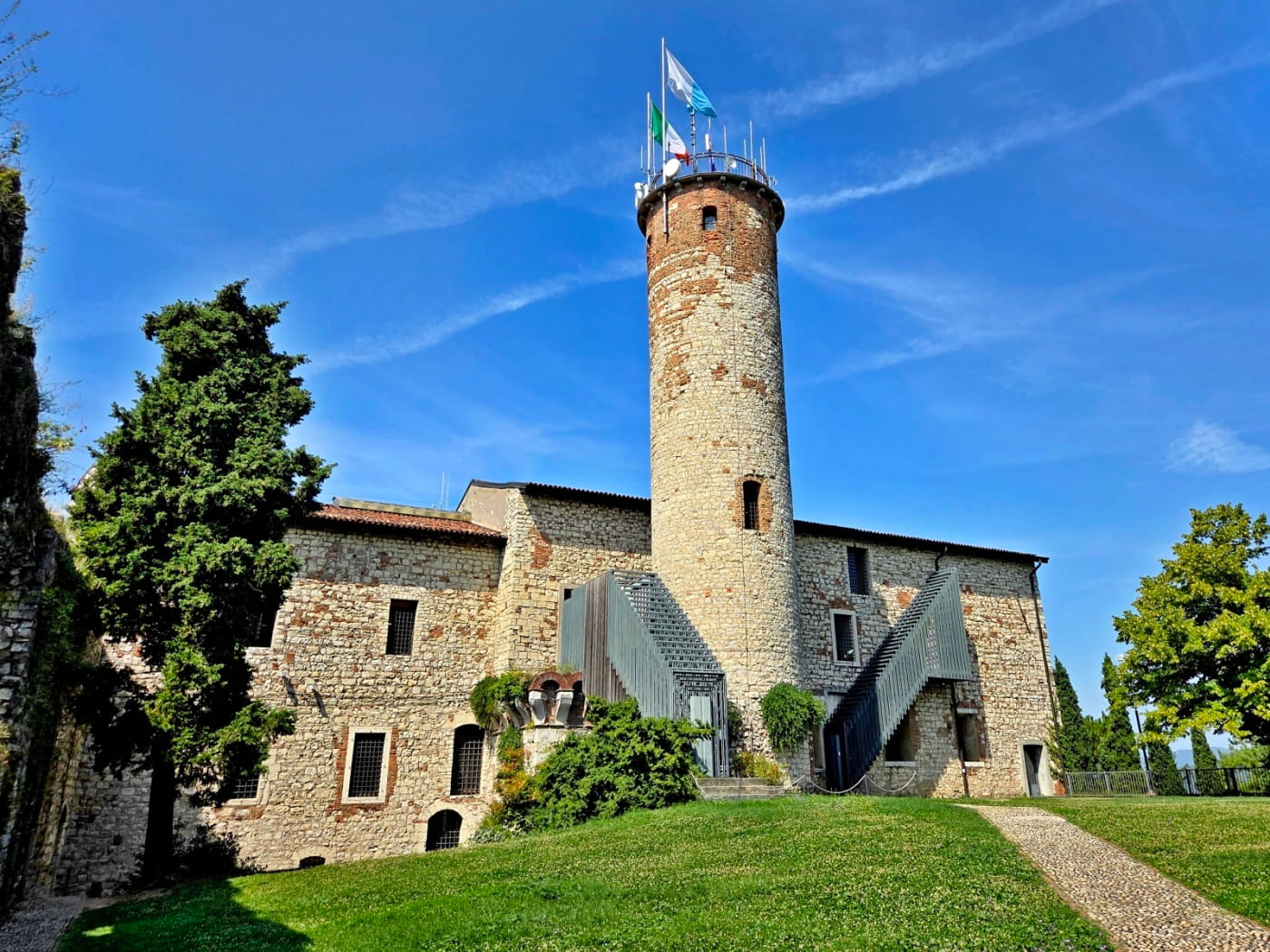
This massive fortress on Cidneo Hill is one of the largest in Italy. It is a steep but short walk from the city center via winding paths and gardens. The walk from the center takes about 20 minutes. For a more in-depth look, see our guide to Castello di Brescia.
- Why visit: For the view. There is no better place to see the red roofs of the old town and the industrial outskirts stretching toward the Alps.
- Tip: The castle grounds serve as a public park. It’s an ideal place to escape the city bustle for an hour. You can also drive to the castle, as there is a relatively large parking lot.
Simple One-Day Itinerary
Morning: Antiquity and Views
- Start the day at the Capitolium to see the Roman ruins before the midday heat begins.
- From there, take the path up to Castello di Brescia.
- Spend an hour wandering the ramparts and photographing the city panorama.
Afternoon: Three Squares
- Walk back down to Piazza della Loggia for a light lunch (try a piadina or local cold cuts).
- Then head to Piazza Paolo VI to tour the “two cathedrals”.
- Walk through the passage, find the rhinoceros, and end your walk at the monumental Piazza della Vittoria.
Evening: Tastes of Lombardy
- As the shops close, join the locals for an aperitivo.
- Find a traditional trattoria for dinner. Order Casoncelli di Barbariga (stuffed pasta with butter and sage) and a glass of Franciacorta, a local sparkling wine that rivals Champagne.
Where to Stay in Brescia
Accommodation in the historic center is relatively limited, so it’s a good idea to book in advance, especially during weekends, local events, or the Mille Miglia race.
- Central Location (Best for First-Timers): Look for hotels or apartments near Piazza della Loggia or Piazza Paolo VI. Staying here ensures you are within walking distance of all major landmarks and the best evening dining spots.
- Scenic / Unique Stays: Consider boutique guesthouses near the base of Cidneo Hill. You’ll enjoy quieter streets and proximity to the castle gardens.
- Budget Options: The area toward the train station (a 10–15 minute walk from the center) often provides more affordable chain hotels and B&Bs.
- Booking Tip: While Brescia is a “hidden gem,” it is a major industrial hub; book early if your visit coincides with local trade fairs or the Mille Miglia car race.
Best Experiences in Brescia
- Exploring Brescia on your own is easy, but some places are much more rewarding with a bit of context or local insight. These are the experiences that can significantly enhance your visit.
- Guided Roman Tour
- A guided visit of the Capitolium and Santa Giulia Museum is highly recommended if you want to fully understand what you’re looking at. The site spans over 2,000 years of history, and without explanation, many details are easy to miss. During weekends and peak season, access can be limited, so it’s worth planning ahead.
- Local Food Experience
- Brescia is deeply rooted in Lombard culinary tradition, and a food-focused experience is one of the best ways to connect with the region. Whether it’s a small-group tasting or a cooking class, trying dishes like casoncelli or polenta with a local guide adds a completely different layer to your visit.
- Franciacorta Wine Experience
- Just outside the city lies Franciacorta, one of Italy’s most prestigious sparkling wine regions. Visiting a vineyard or joining a tasting tour is a great half-day trip. Many wineries require advance booking, especially during weekends.
- Aperitivo Culture (Try a Pirlo)
- Skip the typical Spritz and ask for a Pirlo, Brescia’s local version of the aperitivo. The best way to experience it is in a lively square in the early evening, when locals gather for drinks and small bites before dinner.
Practical Tips
Transport: If driving, use the underground parking at Piazza della Vittoria. It is safe and right in the center. If coming by train, the station is about a 10–15 minute walk from the center.
Historical monuments: Some of the main attractions, especially museums, have limited opening hours, so it is worth checking availability in advance to avoid disappointment.
Time: One full day (about 6–8 hours) is enough to see all the main sites without rushing.
Food: Don’t look for pizza! Brescia is in the heart of Lombardy—look for risotto, polenta, and Casoncelli pasta.
Local Drink “Pirlo”: Don’t order an Aperol Spritz here; ask for a Pirlo. It is the Brescian version of the drink, usually made with still white wine and Campari or Aperol.
Is it Worth a Visit?
Absolutely. I first visited Brescia in winter during depressing, rainy weather. I wasn’t too impressed then, but I’ve returned several times since, and with each visit, I’ve grown fonder of it. Moreover, Brescia is an ideal destination for travelers tired of “tourist traps”. It offers an authentic Italian experience where history is not just a museum exhibit but a backdrop to everyday life. The combination of 1930s Rationalism and ancient Roman ruins makes it one of the most visually interesting cities in Lombardy.
Exploring the Neighborhood: Nearby Gems
If you have an extra day or two, Brescia is the perfect base to explore these nearby towns:
Salò
Located on the western shore of Lake Garda, Salò boasts the longest promenade on the lake and an elegant, refined atmosphere. It’s perfect for a sophisticated lakeside lunch and a stroll past pastel-colored villas.
Mantova (Mantua)
A Renaissance masterpiece surrounded by three artificial lakes, once ruled by the powerful Gonzaga family. Its Palazzo Ducale is a massive complex of 500 rooms filled with incredible art, making it a must for history enthusiasts.
Desenzano del Garda
The liveliest town on Lake Garda, offering a bustling harbor, great shopping, and a vibrant nightlife scene. It is easily accessible by a 15-minute train ride from Brescia, making it the perfect spot for a quick lake escape.
Brescia is best enjoyed at a slower pace. Take your time to explore its streets, and if you can, use it as a base to discover nearby destinations around Lake Garda and beyond.