
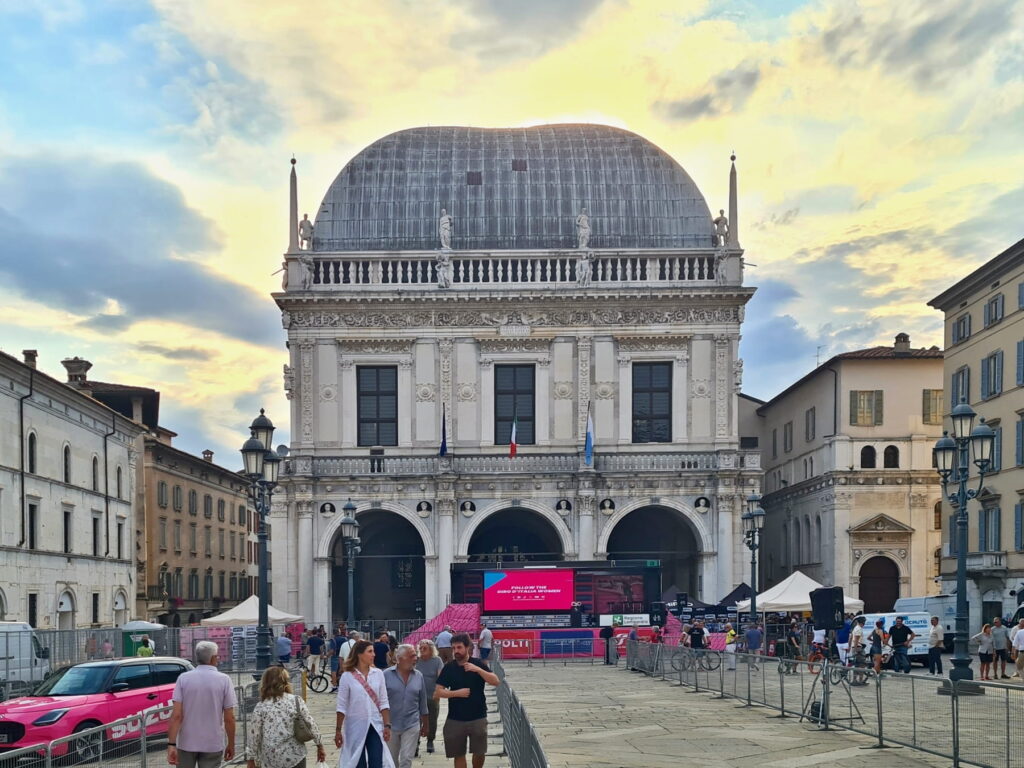
Piazza della Loggia represents the architectural peak of the Renaissance in Brescia, serving as the city’s most elegant public space. This rectangular square is a central point for both locals and travelers, offering a blend of Venetian style and historic civic importance. Visiting Piazza della Loggia allows you to see how the Republic of Venice influenced the mainland’s urban design and daily life centuries ago.
Why visit
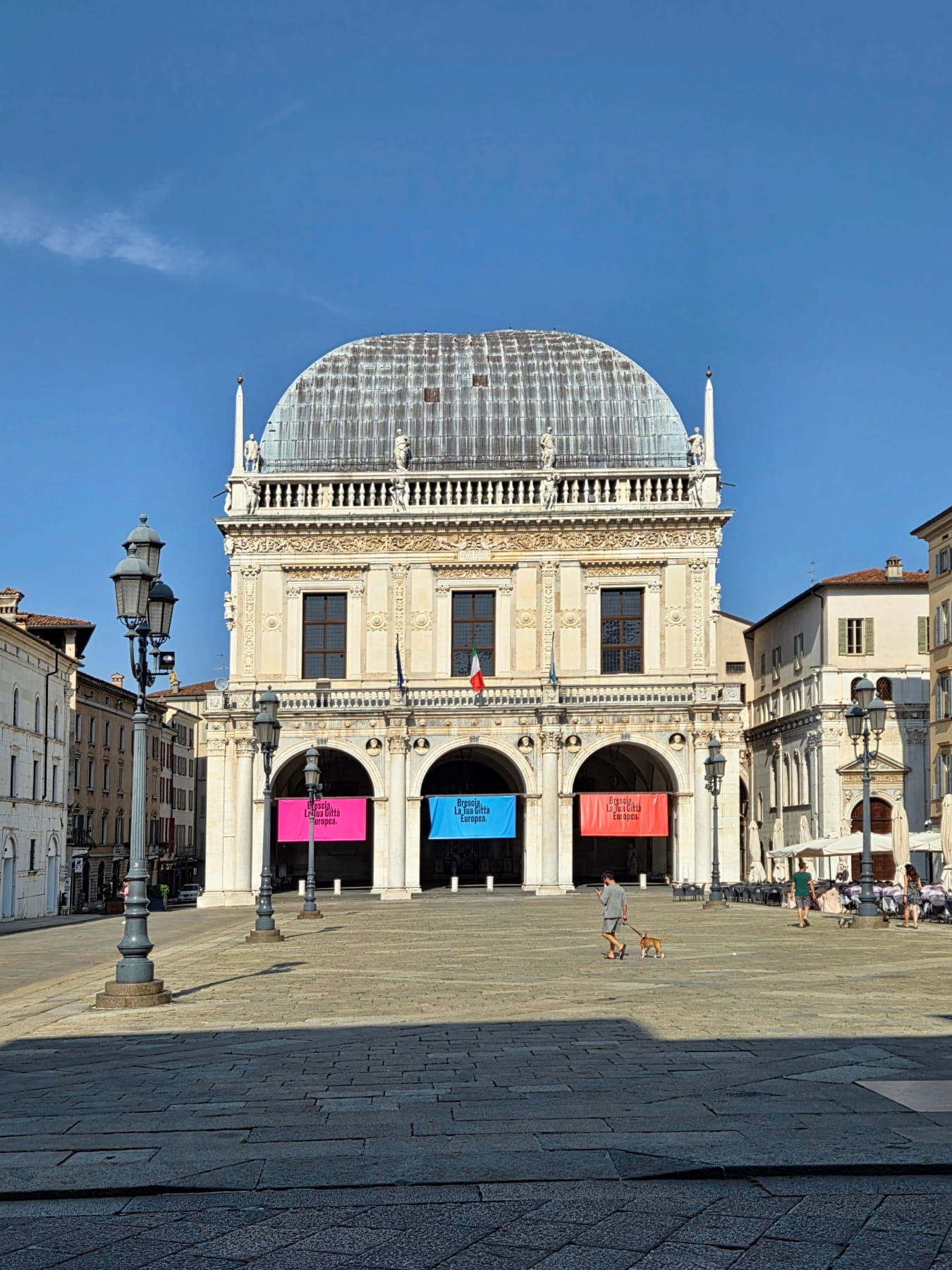
The square is primarily defined by the Palazzo della Loggia, which began construction in 1492. This marble building is a masterpiece of the Renaissance, featuring large arches and a distinctive lead-covered roof that resembles a ship’s hull. It stands as a testament to the city’s prosperity during the 15th and 16th centuries. Unlike more crowded Italian plazas, Piazza della Loggia maintains a functional, lived-in atmosphere where you can observe the local pace of life.
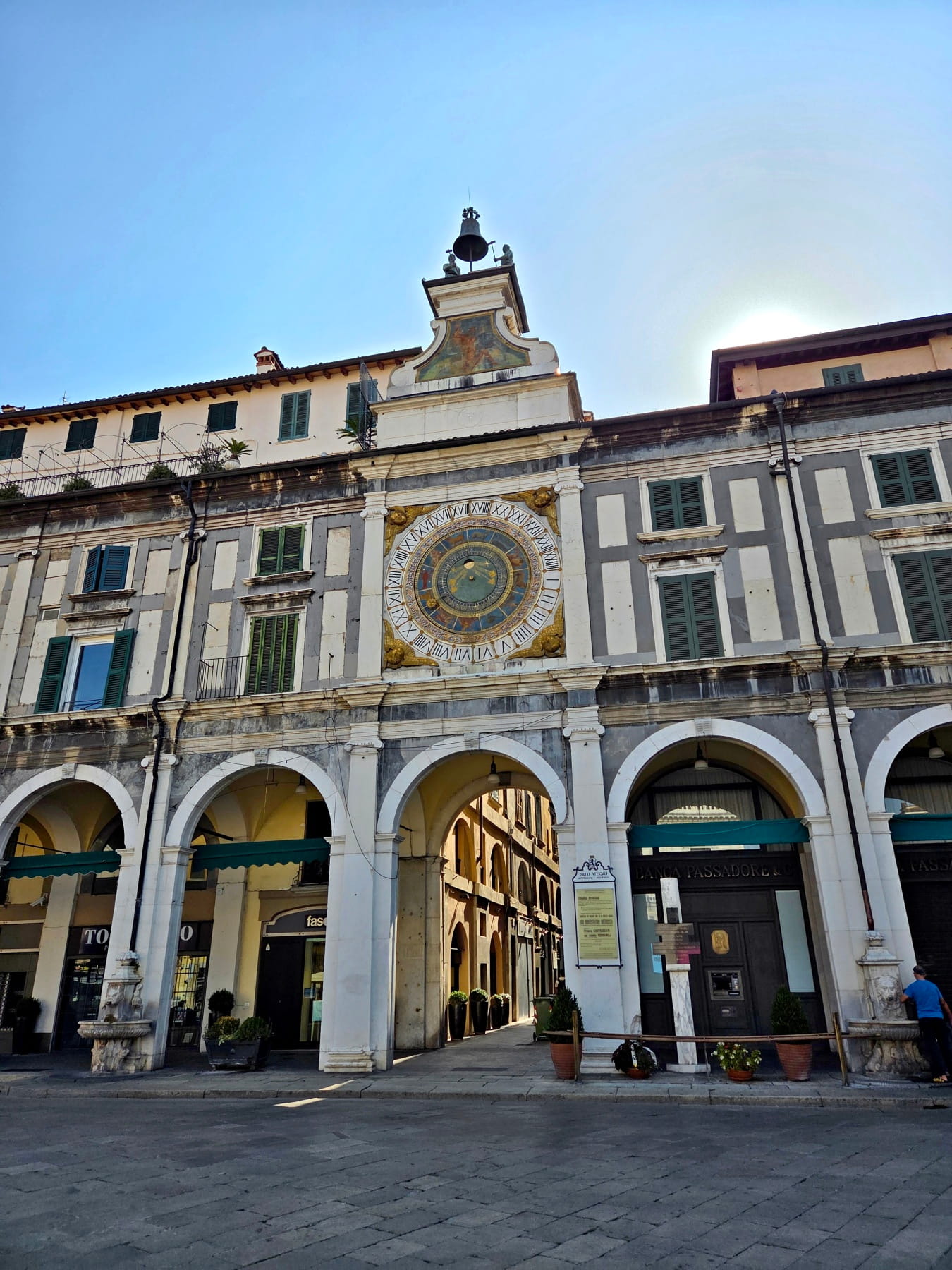
Opposite the palace, you will find the clock tower, or Torre dell’Orologio. This structure is famous for its astronomical clock from 1546, which features two bronze figures, known as the “Macc de le Ore,” who strike the bell to mark the time. The intricate dial shows the phases of the moon and the signs of the zodiac, remaining a functional piece of 16th-century engineering that continues to serve the city today.
Beyond the grand architecture, the square is a place of historical reflection. While its origins are Renaissance, it also bears the marks of modern history, including a monument dedicated to the victims of the 1974 bombing. This layer of history makes the square more than just a beautiful backdrop; it is a space where the city’s past and present are deeply intertwined.
What to see and highlights
- Palazzo della Loggia: The focal point of the square, this building currently serves as the town hall. Notice the rich sculptural decorations on the facade, which involved several famous architects over decades of construction.
- The Astronomical Clock: Located on the eastern side of the square, this 16th-century timepiece is one of the most complex of its kind. Watch for the mechanical figures at the top who strike the hours.
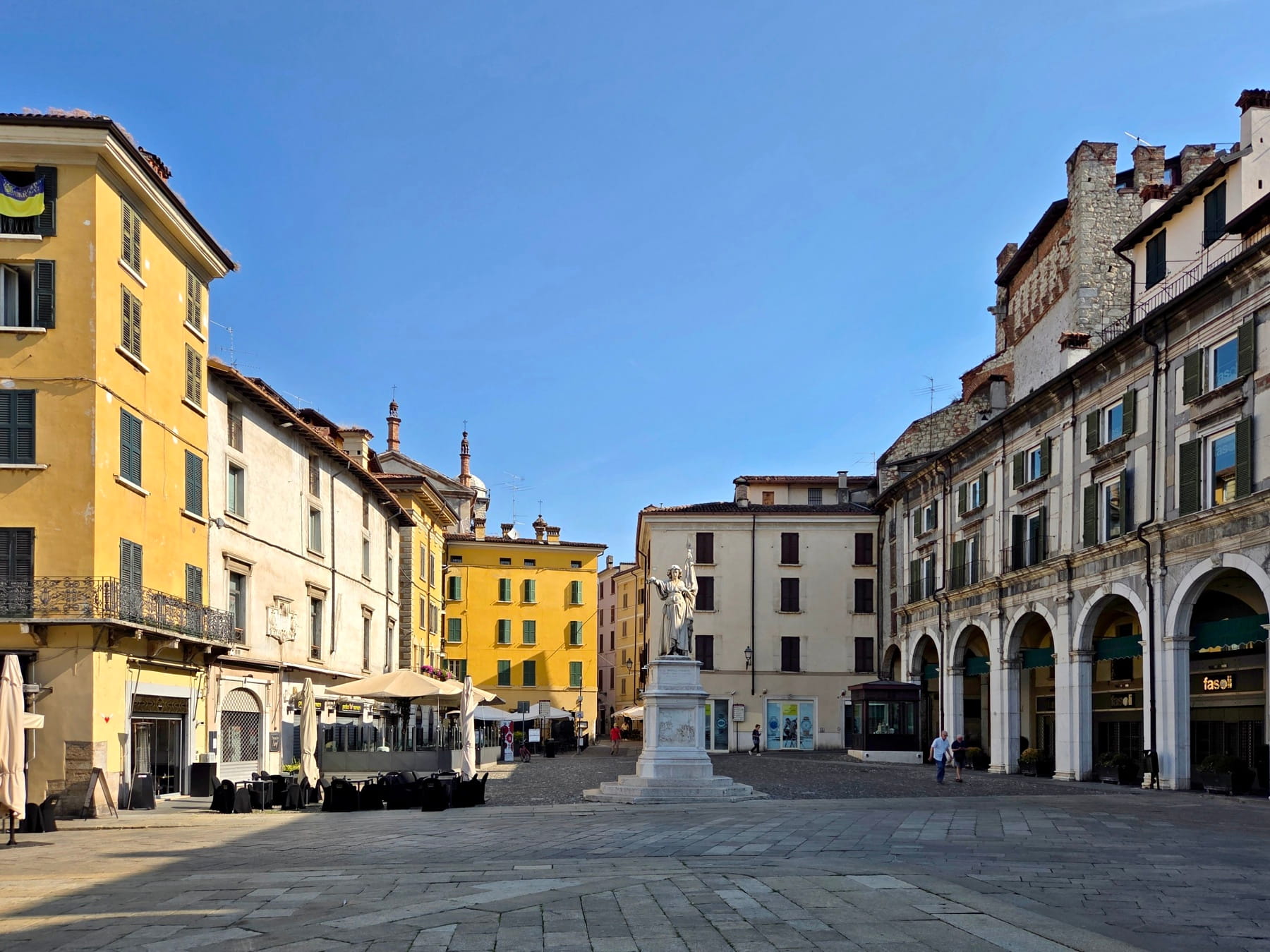
- The Porticoes: The square is lined with elegant arcades that house traditional cafes and shops. These porticoes provide a shaded walkway and are a perfect example of Italian urban planning designed for both commerce and social interaction.
- Venetian Influence: Look for the Lion of St. Mark, a symbol of the Venetian Republic’s long rule over Brescia, integrated into several architectural details around the square.
- Monte di Pietà: These are two historic buildings on the southern side of the square. The older section features an open loggia and ancient Roman inscriptions embedded into its walls, creating a literal patchwork of history.
Practical information
Piazza della Loggia is located in the heart of the historic center of Brescia. It is a pedestrian-only zone, making it very easy to explore on foot.
- Access: The square is a short walk from other major sites like the Tempio Capitolino and the Duomo Nuovo. If you are arriving from the train station, it is about a 15-minute walk or a quick ride on the city’s automated metro system (Vittoria station).
- Parking: Since the center is a restricted traffic zone (ZTL), it is best to park in one of the perimeter garages, such as Parcheggio Piazza Vittoria, which is only a few minutes away.
- Time Needed: You can see the main architectural highlights in about 30 to 45 minutes, but it is worth staying longer to enjoy a coffee under the porticoes or to explore the nearby side streets.
Tips for visitors
- Evening Atmosphere: The square is particularly striking at night when the white marble of the Palazzo della Loggia is illuminated. It is a popular spot for an evening stroll before dinner at one of the nearby osterias.
- Check the Market: On certain days, the square and surrounding streets host local markets. While this can make the architecture harder to photograph, it provides a very authentic look at Brescian life.
- Photography Timing: For the best light on the Palazzo della Loggia, visit in the morning when the sun hits the marble facade directly.
- Combine with a Hike: After exploring the square, consider walking up to Brescia Castle for a panoramic view of the city’s rooftops and the surrounding mountains.
Nearby places
- Brescia Castle: A massive fortification on Cidneo Hill that offers extensive grounds, museum exhibitions, and views over the entire city.
- Duomo Nuovo: The “New Cathedral” of Brescia, featuring a grand late-Baroque facade and one of the tallest domes in Italy.
- Tempio Capitolino: The remains of the main Roman temple in the ancient city of Brixia, located along the historic Via dei Musei.
- Piazza Paolo VI: A unique square that houses both the city’s cathedrals, providing a direct comparison between Romanesque and Baroque styles.
- Duomo Vecchio: Also known as La Rotonda, this 11th-century circular stone church is one of the most significant Romanesque buildings in the region.