
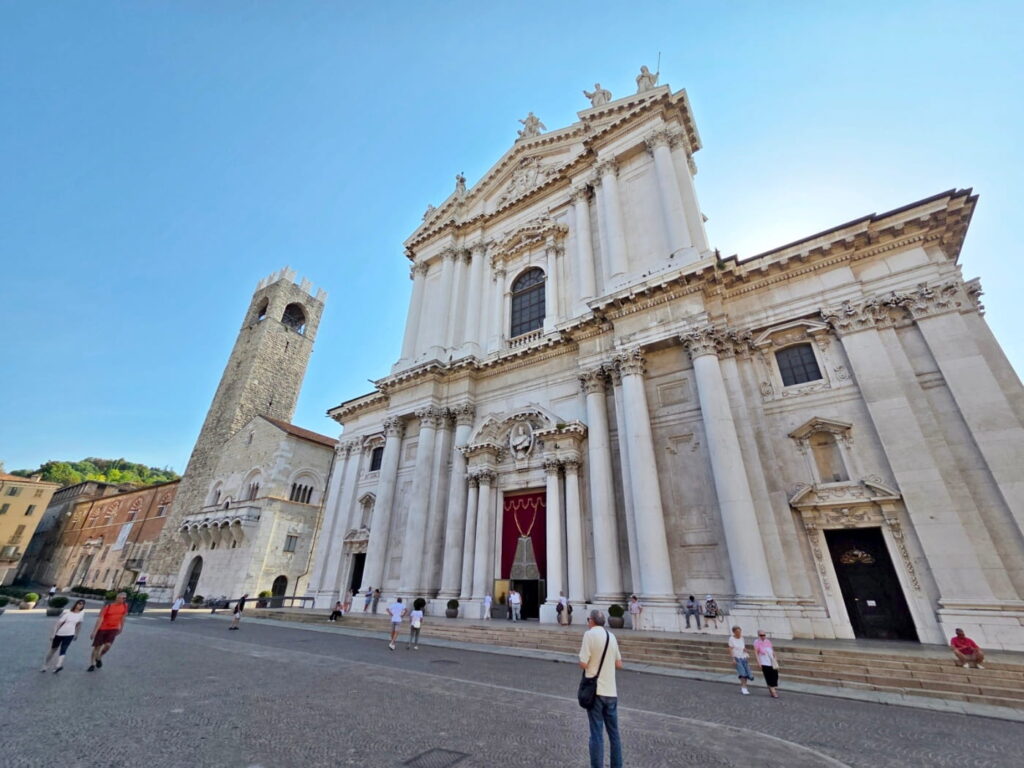
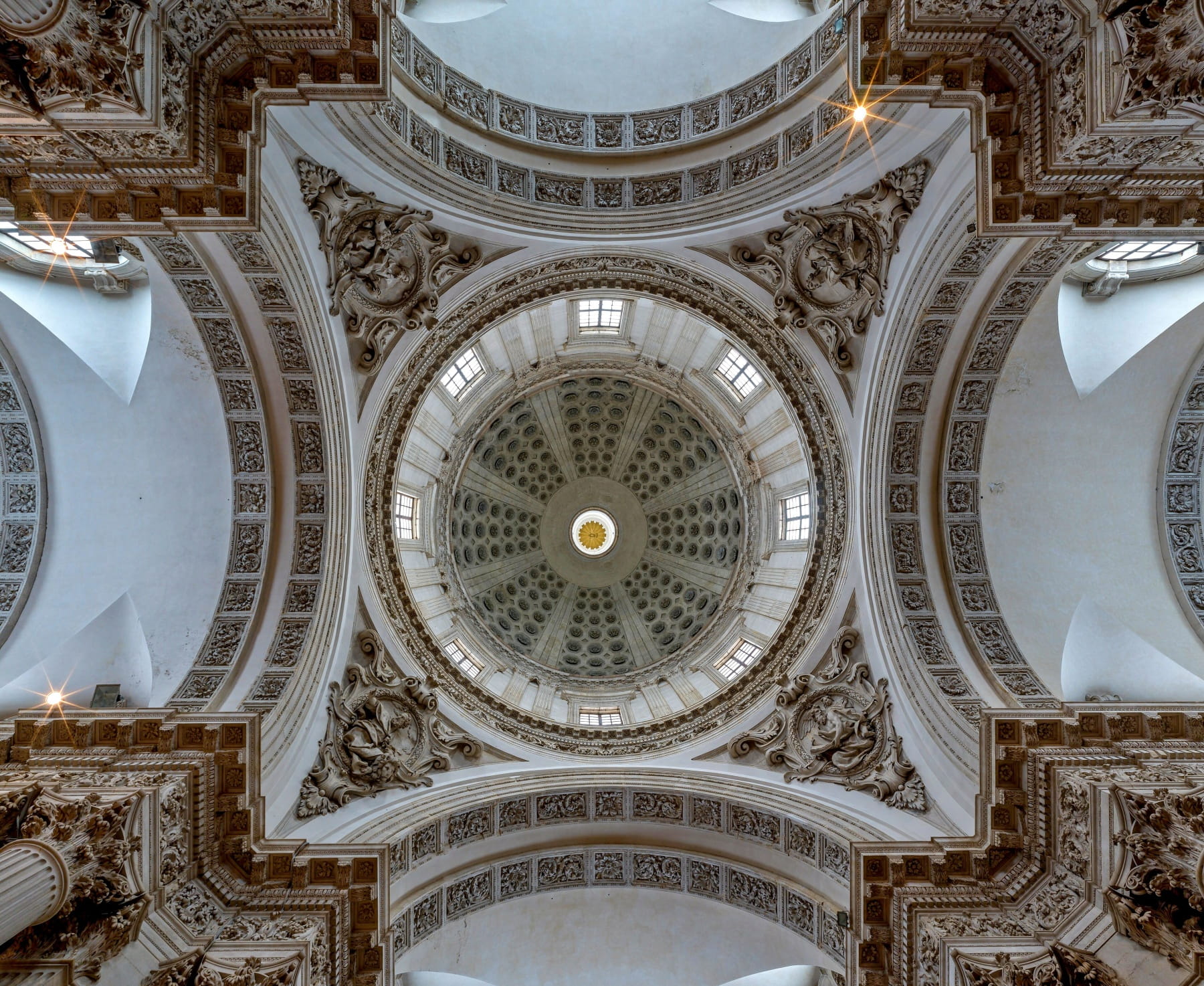
The Duomo Nuovo, or the New Cathedral, stands as a white Botticino marble landmark in the heart of Brescia. Dominating the city’s skyline with one of the largest domes in Italy, it serves as a primary example of the transition from Late Renaissance to Baroque architecture. A visit here offers a chance to see how centuries of construction culminated in a space that remains a central part of local life.
Why visit
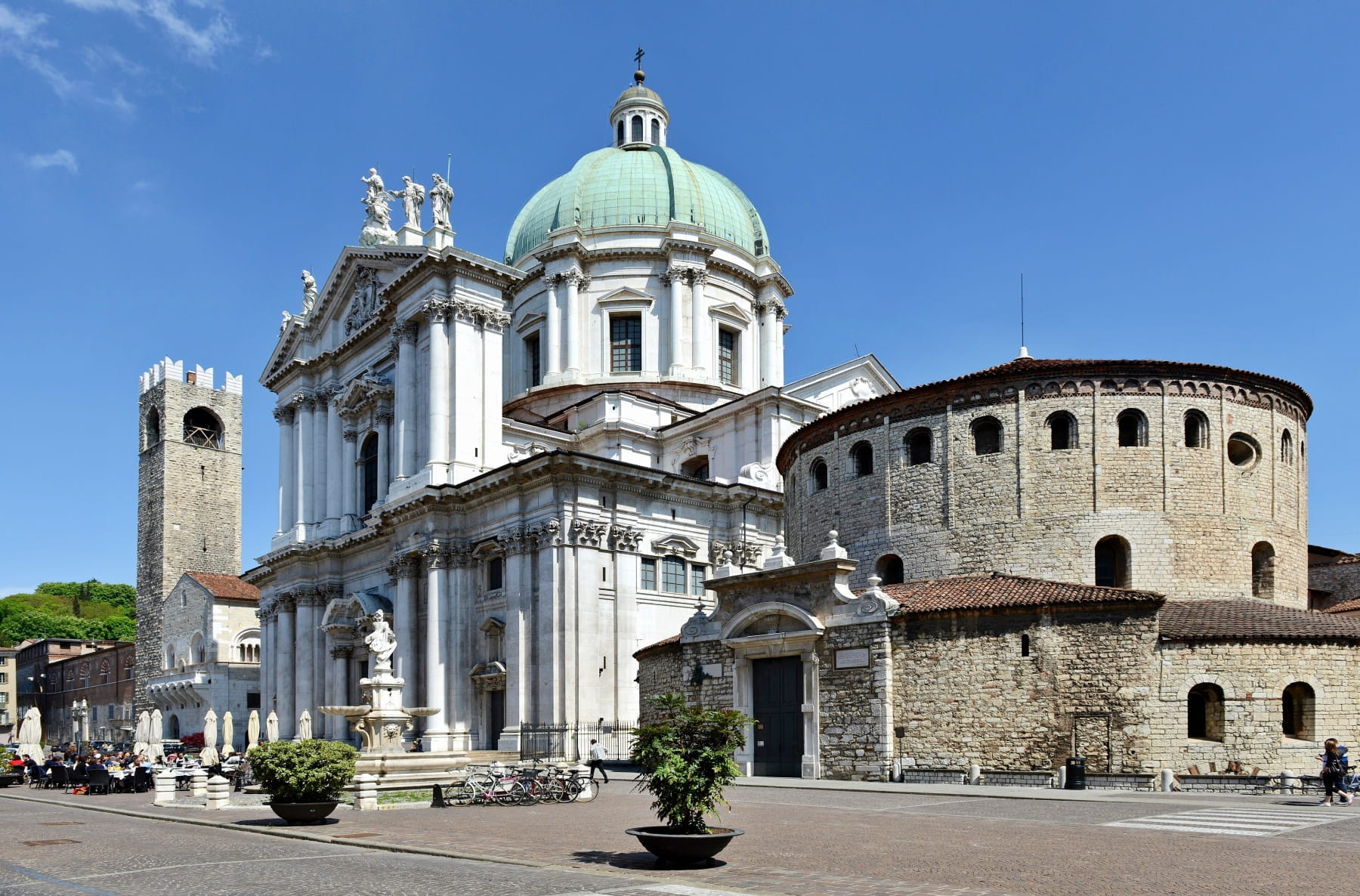
The Duomo Nuovo is worth a visit primarily because of its architectural scale and its unusual relationship with its neighbor. It sits directly next to the Duomo Vecchio, the circular Romanesque “Old Cathedral”. Seeing these two buildings side-by-side provides a visual lesson in how ecclesiastical styles shifted over hundreds of years within a single square.
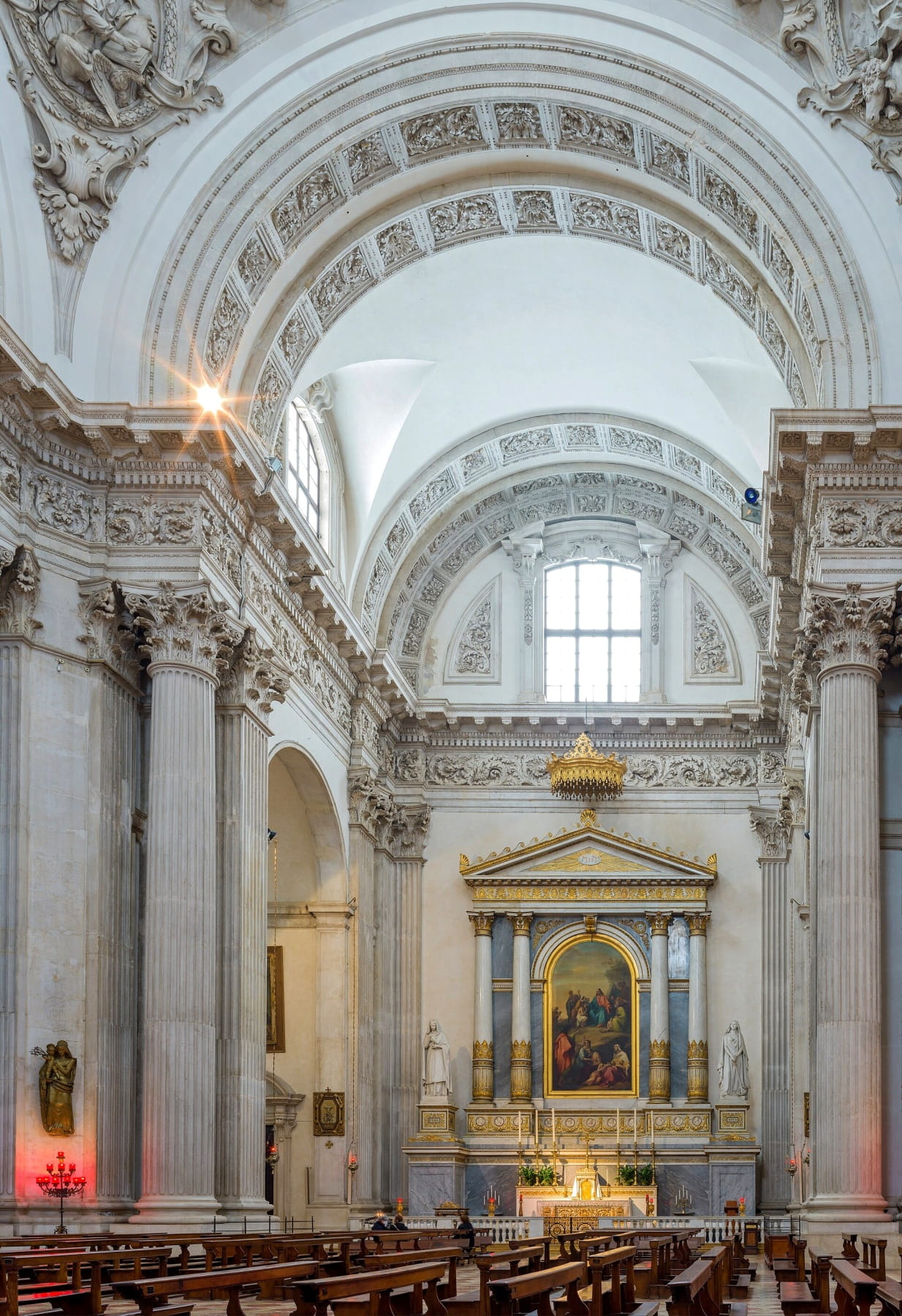
While many grand Italian cathedrals can feel like museums, the Duomo Nuovo remains a functioning place of worship with a welcoming atmosphere. The entrance is free of charge, making it an accessible stop for anyone exploring the historic center. Inside, the sheer volume of the nave and the height of the cupola create a sense of openness that contrasts with the narrow, winding medieval streets found nearby.
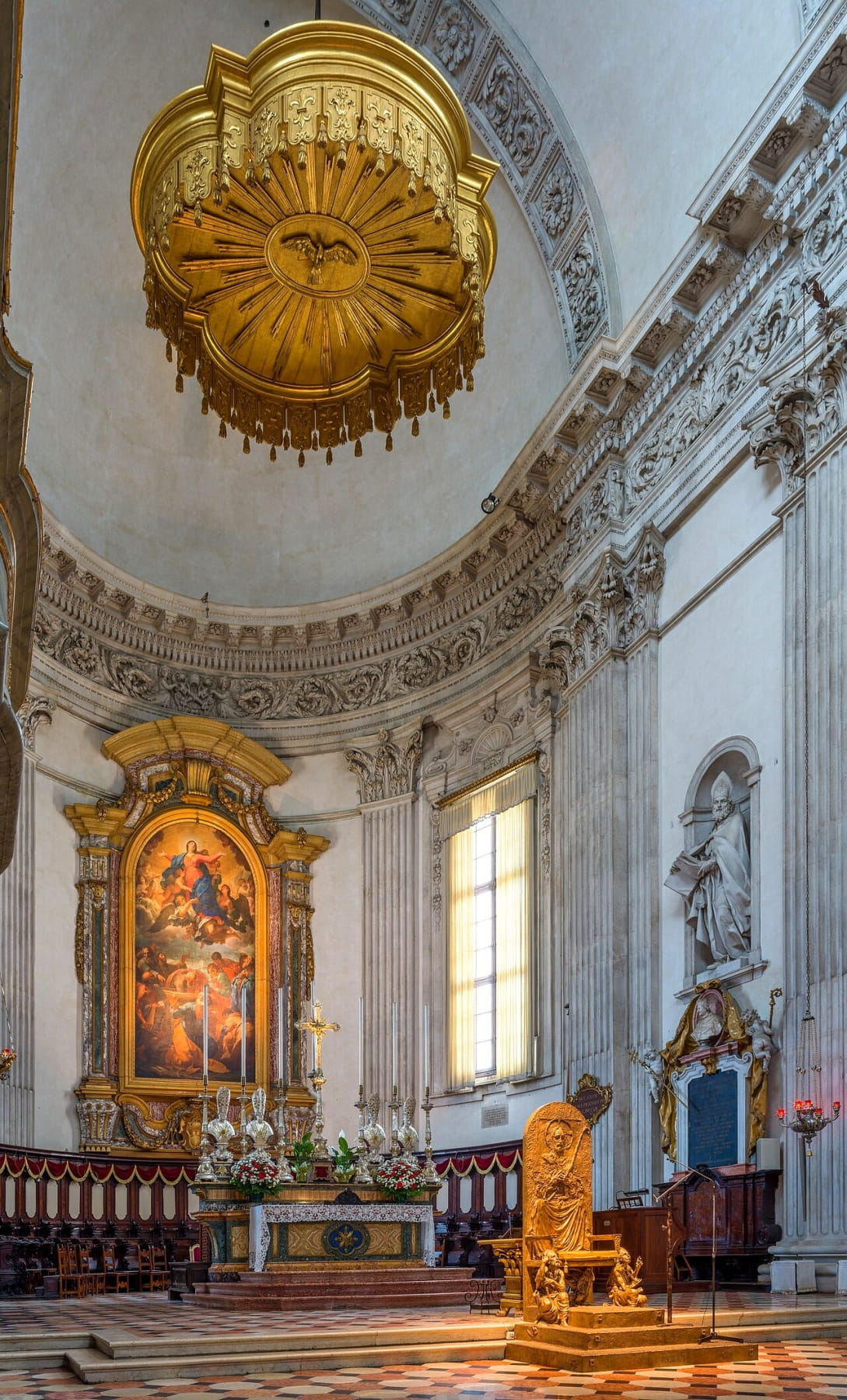
The cathedral is also a repository for local art and history. It houses significant works, including the Ark of Saint Apollonius and various paintings that reflect the religious devotion of the region. Whether you are interested in the engineering of massive domes or the quietude of a grand interior, the cathedral provides a grounded, authentic experience of Lombardy’s cultural heritage.
What to see and highlights
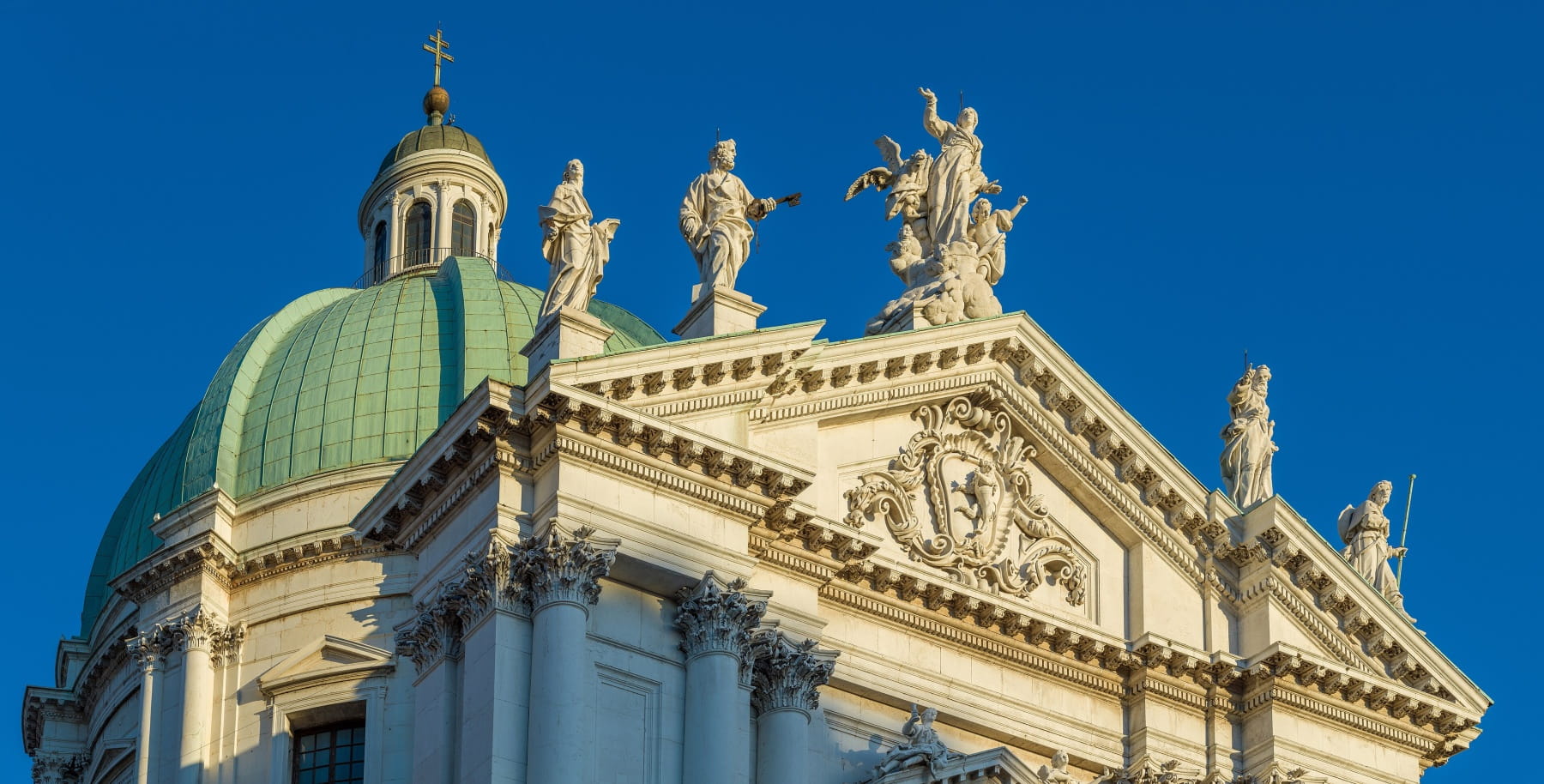
- The Massive Cupola: The dome is the most recognizable feature of the building. It is the third largest in Italy, trailing only behind St. Peter’s in Rome and the Cathedral in Florence.
- The Facade: Constructed from local Botticino marble, the facade features a mix of Corinthian columns and Baroque flourishes. It reflects the sunlight brilliantly, especially during the afternoon hours.
- The Interior Art: Look for the 16th-century organ and the various side chapels. The Ark of Saint Apollonius, a masterpiece of 16th-century sculpture, is one of the most important liturgical items inside.
- Piazza Paolo VI: The cathedral defines the eastern side of this square. It is one of the few places in Italy where two distinct cathedrals stand right next to each other, creating a unique architectural ensemble.
- The Monument to Pope Paul VI: Inside, you will find a monument dedicated to the Brescian-born Pope Paul VI, for whom the square outside is named.
Practical information
The Duomo Nuovo is located on Piazza Paolo VI, the social heart of Brescia. It is easily reached on foot from any part of the historic center. If you are coming from the Tempio Capitolino or the Roman ruins, it is a short five-minute walk through the pedestrian zone.
As a place of worship, entry is free, though visitors should remain quiet and respectful of ongoing services. Most people spend about 30 to 45 minutes inside to appreciate the architecture and the artwork. If you plan to sit at one of the cafes on the square afterward to admire the exterior, allow for a bit more time.
The area around the cathedral is mostly pedestrianized. If you are arriving by car, a very practical option is to park at Piazza della Vittoria. This square is located in the immediate vicinity of the historic core and offers an underground parking lot, from which you can reach the cathedral with a comfortable short walk. The cobblestone surfaces of the squares are relatively flat, making it accessible for most travelers.
Tips for visitors
Relax on the Square: Piazza Paolo VI is lined with restaurants and cafes equipped with large sun umbrellas. It is a perfect spot to sit down, order an espresso or a glass of Franciacorta prosecco, and take in the view of both the Duomo Nuovo and the Duomo Vecchio.
Combine with the Castle: After visiting the cathedral, you can take the path up to Brescia Castle on Cidneo Hill. The walk takes about 15 to 20 minutes and provides a panoramic view where you can see the cathedral’s dome standing out above the red-tiled roofs.
Watch the Light: The white marble of the facade changes character throughout the day. In the late afternoon, the setting sun casts a warm glow on the stone, which is the best time for photography from the center of the square.
Dress Appropriately: Like most Italian churches, respectful attire is required. Ensure shoulders and knees are covered to avoid any issues at the entrance.
Nearby places
- Duomo Vecchio: A unique 11th-century circular Romanesque cathedral located right next to the New Cathedral.
- Piazza della Loggia: An elegant Renaissance square featuring a Venetian-style palace and an iconic astronomical clock tower.
- Tempio Capitolino: The remains of a Roman temple and theater that form the core of the city’s UNESCO World Heritage site.
- Brescia Castle: A massive medieval fortress overlooking the city that offers extensive grounds and military museums.
- Piazza della Vittoria: A wide, open square that showcases 1930s Rationalist architecture, providing a contrast to the medieval surroundings and serving as a central parking hub