
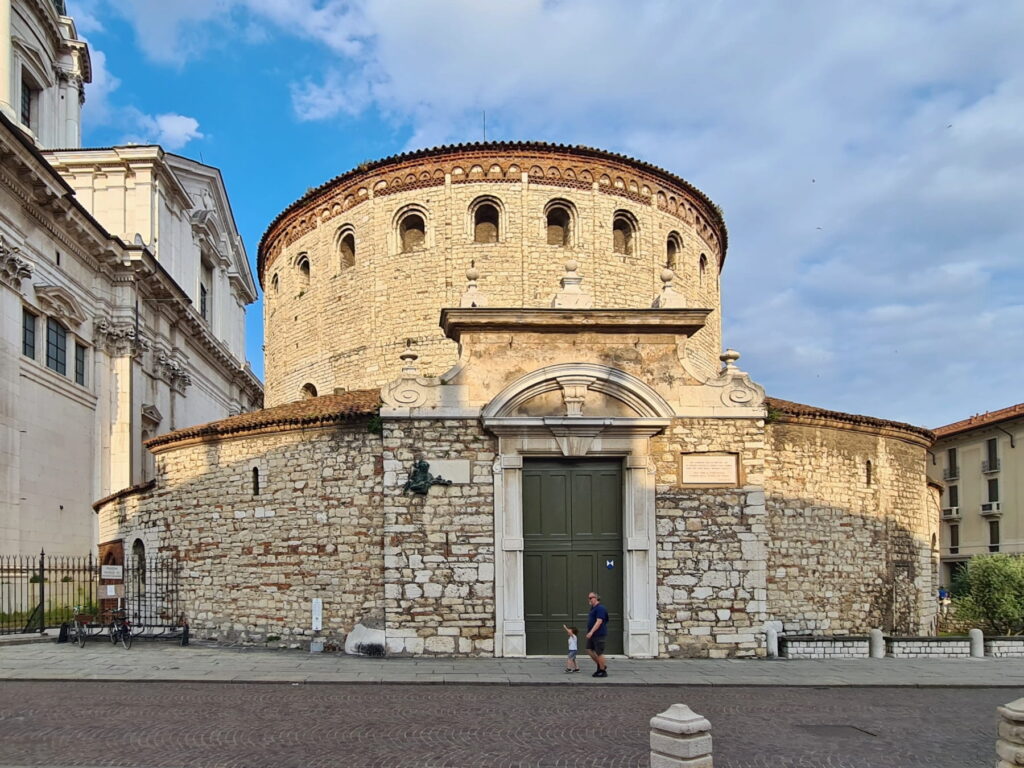
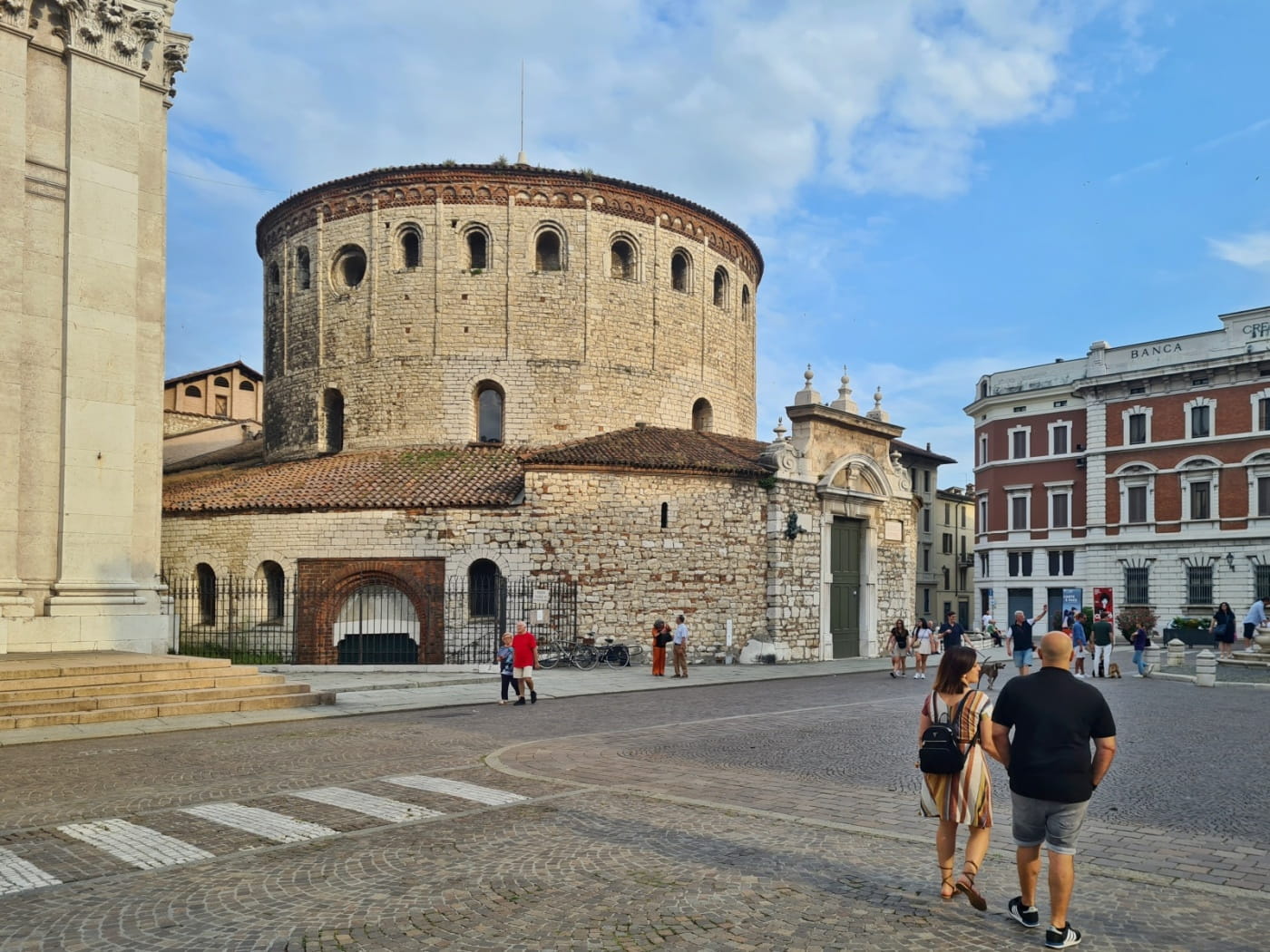
The Duomo Vecchio, also known as the Rotonda, is a rare example of a circular Romanesque cathedral located in the heart of Brescia, Lombardy. Standing prominently on Piazza Paolo VI, this stone structure dates back to the 11th century and offers a stark, meditative contrast to the grand Baroque facade of its neighbor, the Duomo Nuovo. It is a fundamental stop for anyone interested in medieval architecture or the deep religious history of Northern Italy.
Why visit
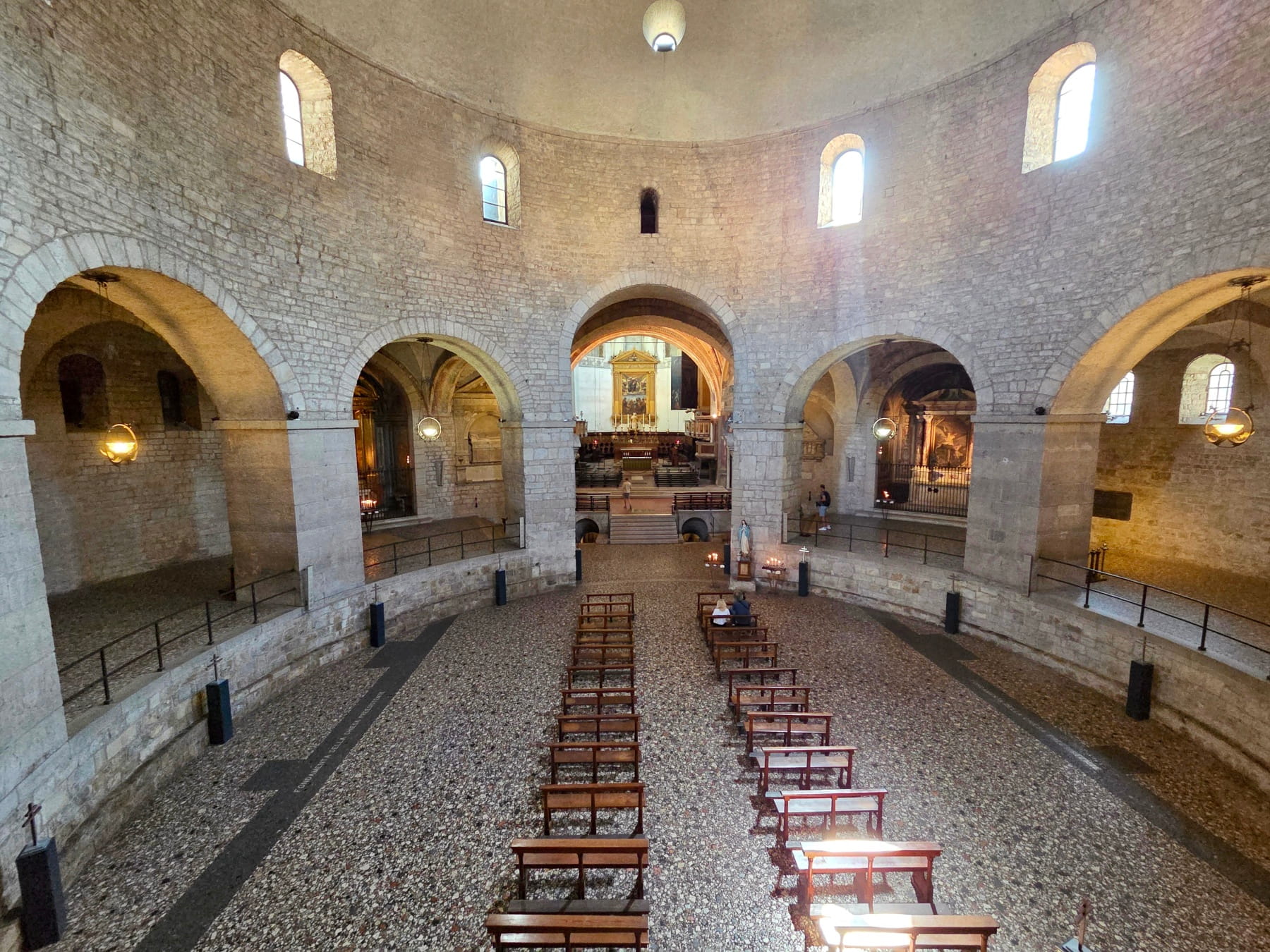
The primary reason to step inside is the building’s unusual geometric design. While most European cathedrals follow a cross-shaped basilica plan, the Duomo Vecchio is a central-plan church built over an even older 6th-century basilica. Its massive stone walls and circular nave create an acoustic and visual environment that feels archaic and grounded.
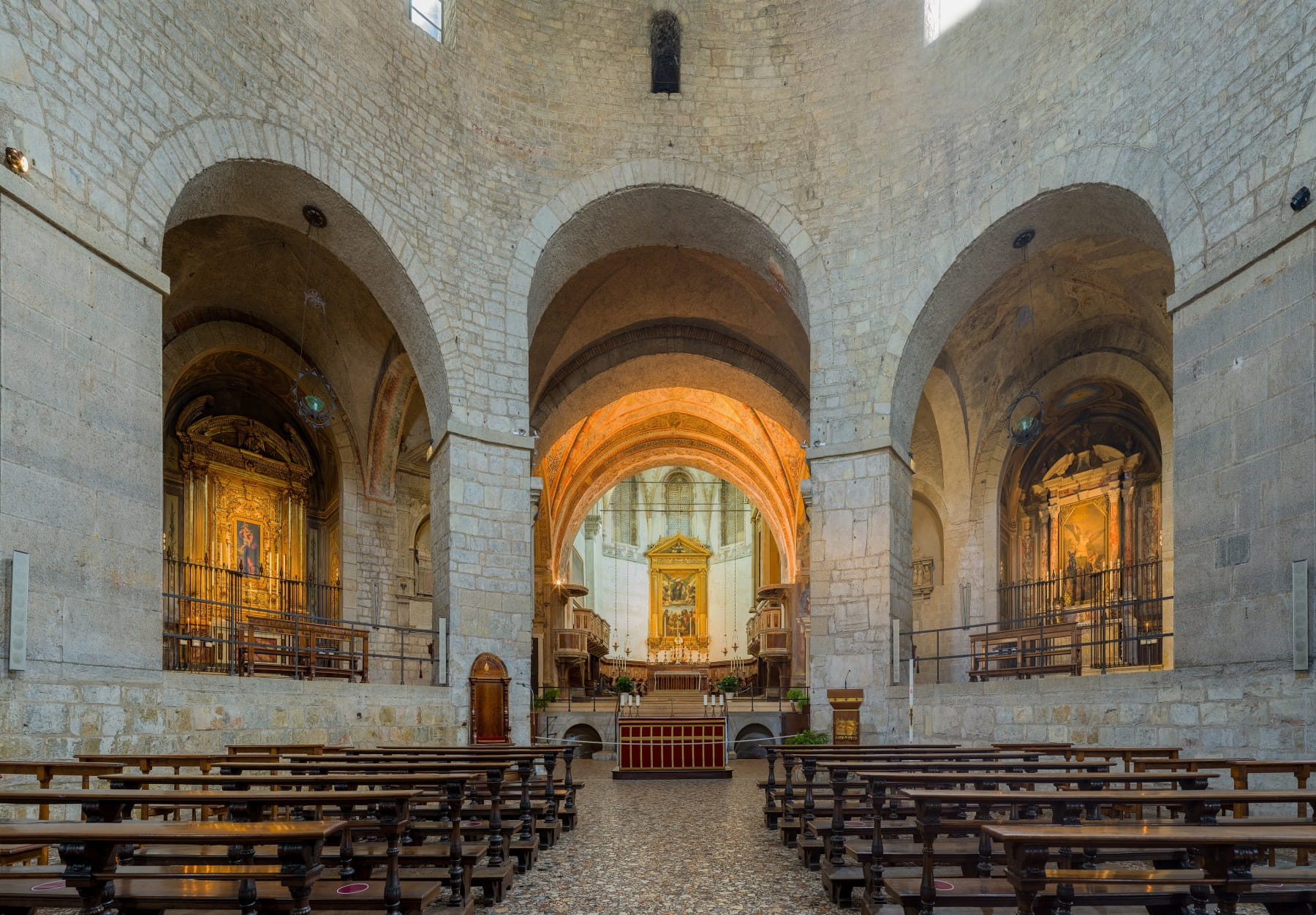
Unlike many heavily renovated religious sites, the “Old Cathedral” has retained much of its medieval austerity. The interior is characterized by bare stone, ancient columns, and a sense of verticality that draws the eye up toward the wide dome. It represents a time when Brescia was a powerful center of trade and faith, reflecting the city’s transition from the Roman era into the Middle Ages.
The location itself adds to the experience. Because the cathedral sits on Piazza Paolo VI, you can observe the architectural evolution of the city in a single glance. Sitting at one of the cafe tables with an espresso or a glass of Franciacorta prosecco allows you to appreciate the visual dialogue between the Romanesque Rotonda and the towering, white marble of the New Cathedral.
What to see and highlights
- The Circular Nave: The main body of the church consists of two concentric circles. The inner circle is supported by eight massive pillars, creating a walkway (ambulatory) that allows you to circle the entire space.
- The Crypt of San Filastrio: Located beneath the main floor, this 9th-century crypt features a forest of small columns with varied capitals, some of which were repurposed from earlier Roman buildings.
- Medieval Mosaics: Look for fragments of floor mosaics from the original 6th-century Paleo-Christian basilica that preceded the current structure.
- The Sarcophagus of Berardo Maggi: A beautifully carved red marble tomb of a 13th-century bishop and lord of Brescia, which stands as a masterpiece of Gothic funerary art.
- The Interior Artwork: While the architecture is Romanesque, the church houses significant Renaissance works, including paintings by Moretto and Romanino, two masters of the Brescian school.
Practical information
The Duomo Vecchio is located on the eastern side of Piazza Paolo VI in the historic center of Brescia. Most of this area is a pedestrian zone, so the best way to arrive is on foot.
- Access: If you are coming from the nearby Tempio Capitolino, it is a short five-minute walk through the medieval streets.
- Opening Hours: The cathedral is generally open daily, though it often closes for a few hours during midday (typically between 12:00 PM and 2:30 PM).
- Fees: Entry to the Duomo Vecchio is free of charge, making it an accessible historical site for all travelers.
- Time Needed: You can see the main interior in 30 minutes, but if you wish to explore the crypt and examine the artworks in detail, plan for about an hour.
Tips for visitors
Respect the Silence As an active place of worship, the atmosphere is very quiet. Even when there are no services, the acoustics of the circular hall carry sound easily, so keeping voices low is essential to preserving the contemplative environment.
Dress Appropriately Like most Italian churches, a modest dress code is expected. Ensure shoulders and knees are covered before entering, especially during the summer months when the temperature in the square can be high.
Visit the Crypt Early The crypt is one of the most atmospheric parts of the building but can feel cramped if several small groups enter at once. Try to visit shortly after the morning opening to have the space to yourself.
The Afternoon Light The stone of the Duomo Vecchio takes on a warm, golden hue in the late afternoon. This is the best time to photograph the exterior from the square before heading toward the Piazza della Loggia for an evening aperitivo.
Nearby places
- Duomo Nuovo: The 17th-century cathedral standing right next to the Rotonda, featuring one of the tallest domes in Italy.
- Piazza Paolo VI: The historic heart of the city where you can find numerous restaurants and cafes with views of both cathedrals.
- Tempio Capitolino: A significant archaeological site featuring the remains of a Roman temple and theater at the foot of the hill.
- Brescia Castle: A massive medieval fortress located on Cidneo Hill that offers panoramic views over the city and the Alps.
- Piazza della Loggia: An elegant Renaissance square known for its Venetian-style architecture and the iconic astronomical clock.