
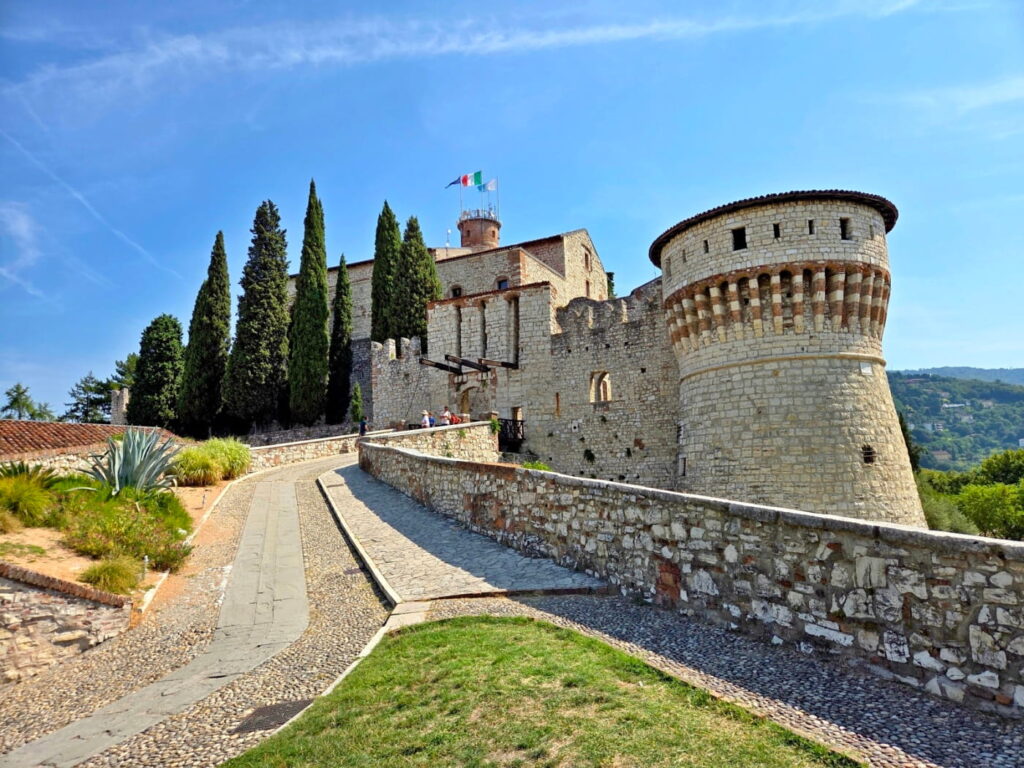
Brescia Castle, known locally as the Falcon of Lombardy, sits atop Cidneo Hill, offering a commanding view over the city and the surrounding Alpine foothills. This sprawling fortification is one of the largest and best-preserved castle complexes in northern Italy, reflecting centuries of military architecture from the Roman era to the Venetian period. It serves as both a historical monument and a quiet public park where the past feels integrated into the daily life of the city.
Why visit
The castle is worth a visit primarily for its layers of history. Unlike many fortresses that were built in a single era, Brescia Castle is a patchwork of different styles. You can find Roman remains integrated into medieval walls and Renaissance bastions designed to withstand gunpowder artillery. It provides a tangible timeline of how defensive strategies evolved over a millennium. If you are interested in understanding the historical context in more depth, visiting with a guide or combining the castle with the nearby Santa Giulia Museum can significantly enrich the experience.
Beyond the architecture, the castle offers a change of pace from the urban bustle below. The grounds are expansive, featuring winding paths, gardens, and quiet corners that feel far removed from the traffic of the modern city. It is a place where you can appreciate the scale of Lombardy’s history without the commercial pressure often found in more famous Italian landmarks.
For those interested in specialized history, the castle houses two significant museums: the Luigi Marzoli Arms Museum and the Museum of the Risorgimento. Even if you choose not to enter the exhibitions, the exterior structures, including the drawbridges and the imposing keep, provide enough visual interest to justify the walk up the hill.
What to see and highlights
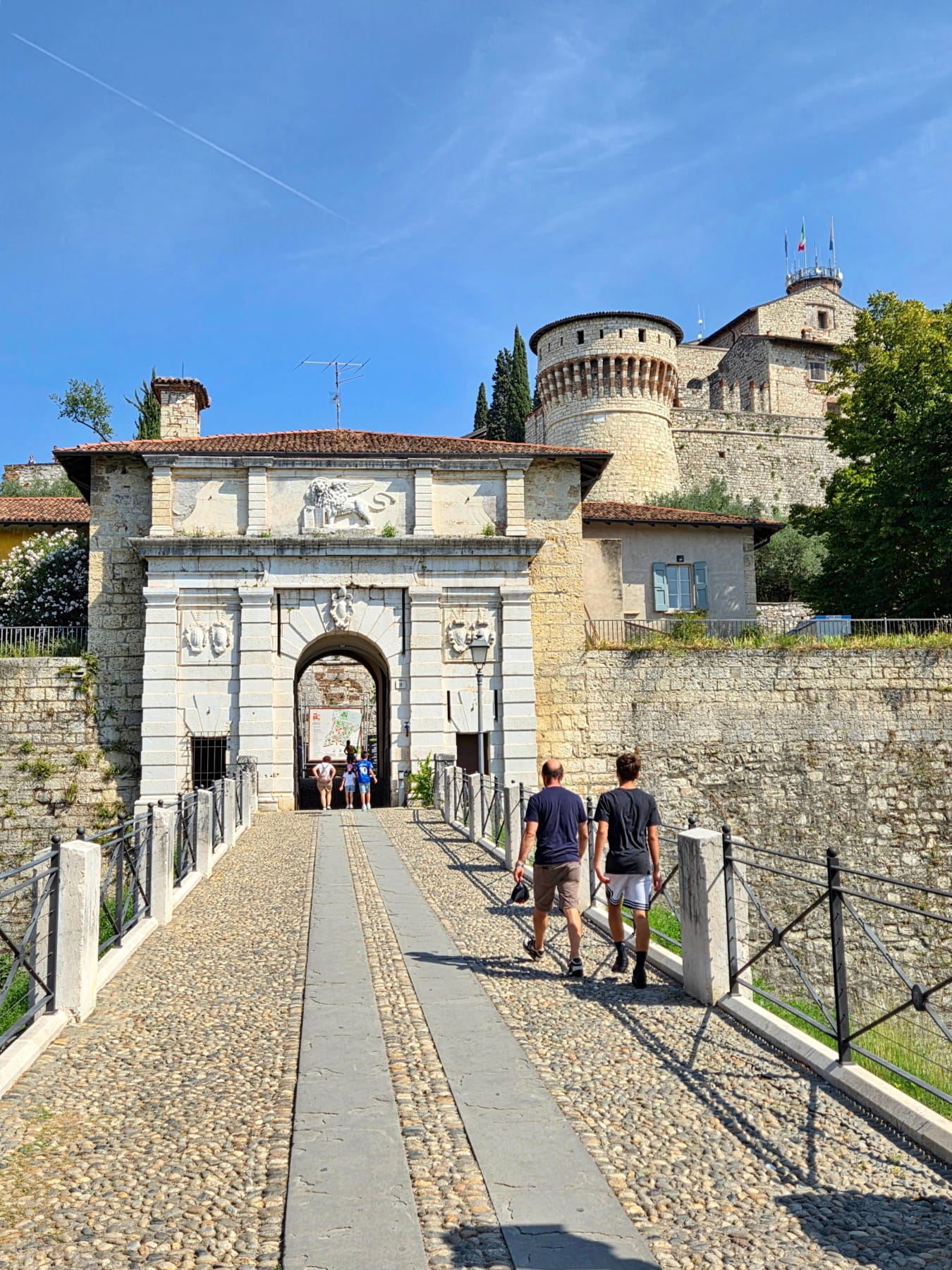
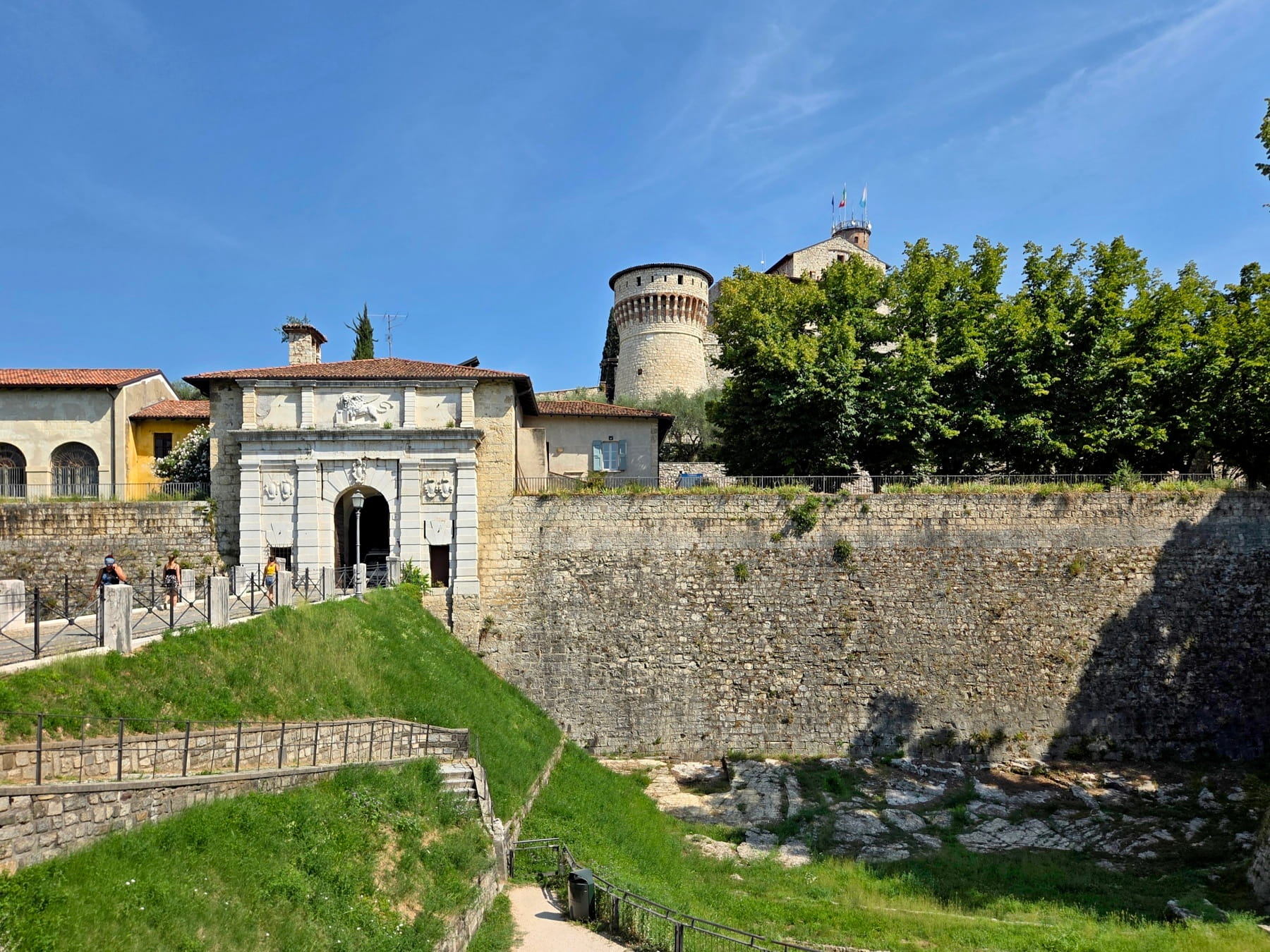
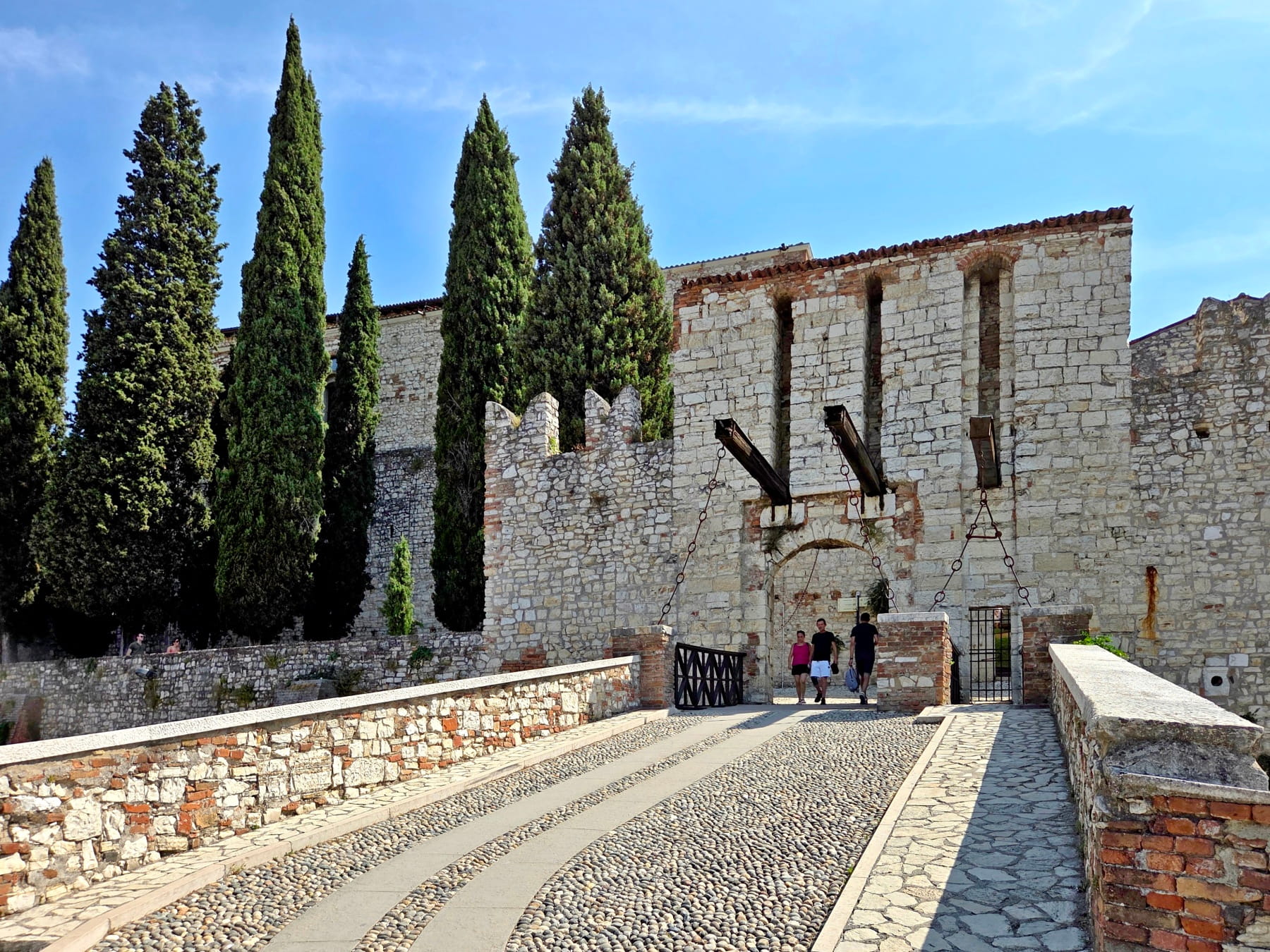
The Main Gate and Drawbridge: The entrance is a grand example of 16th-century Venetian architecture, featuring the Lion of St. Mark. Crossing the stone bridge gives you an immediate sense of the castle’s defensive strength.
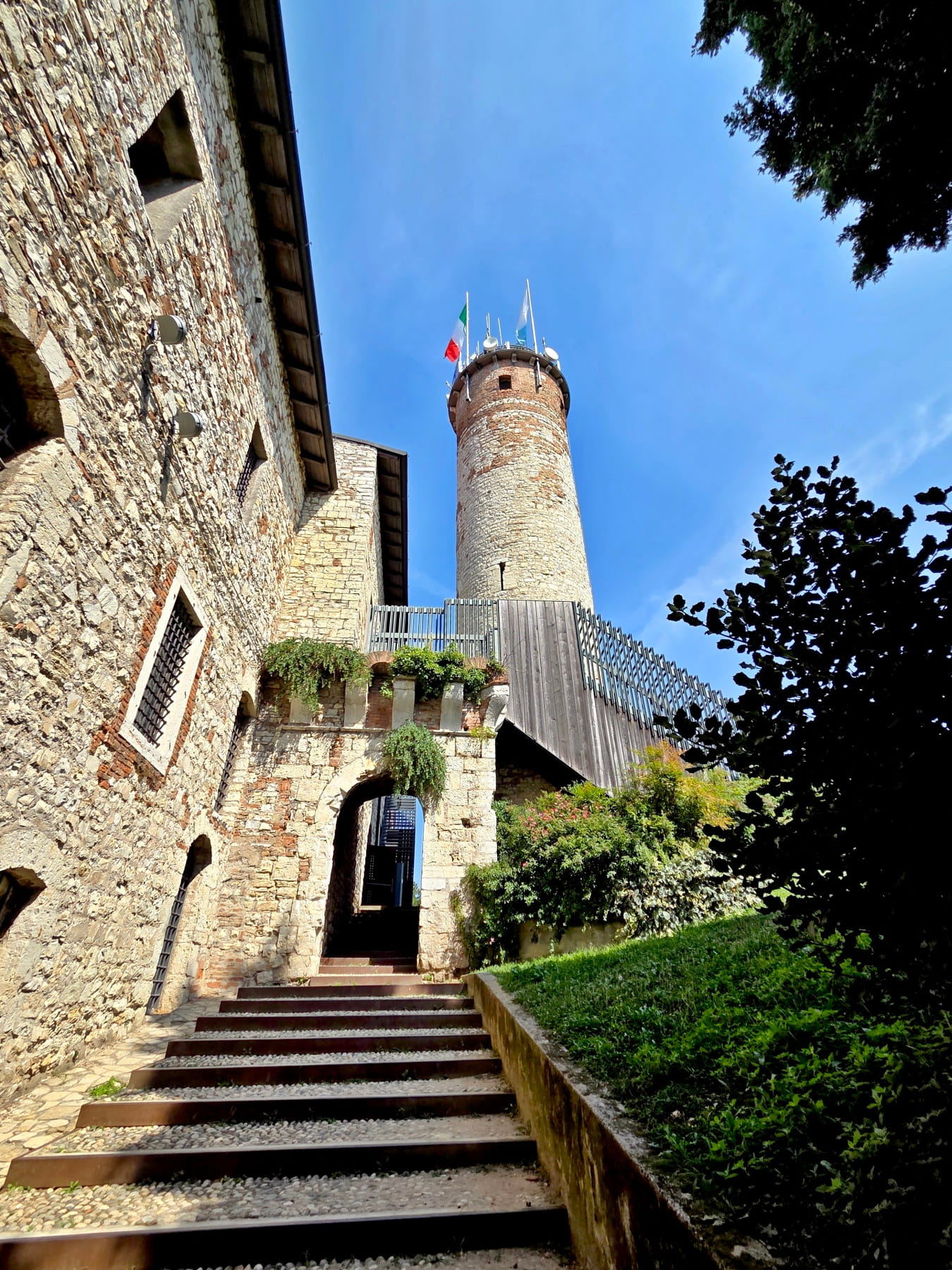
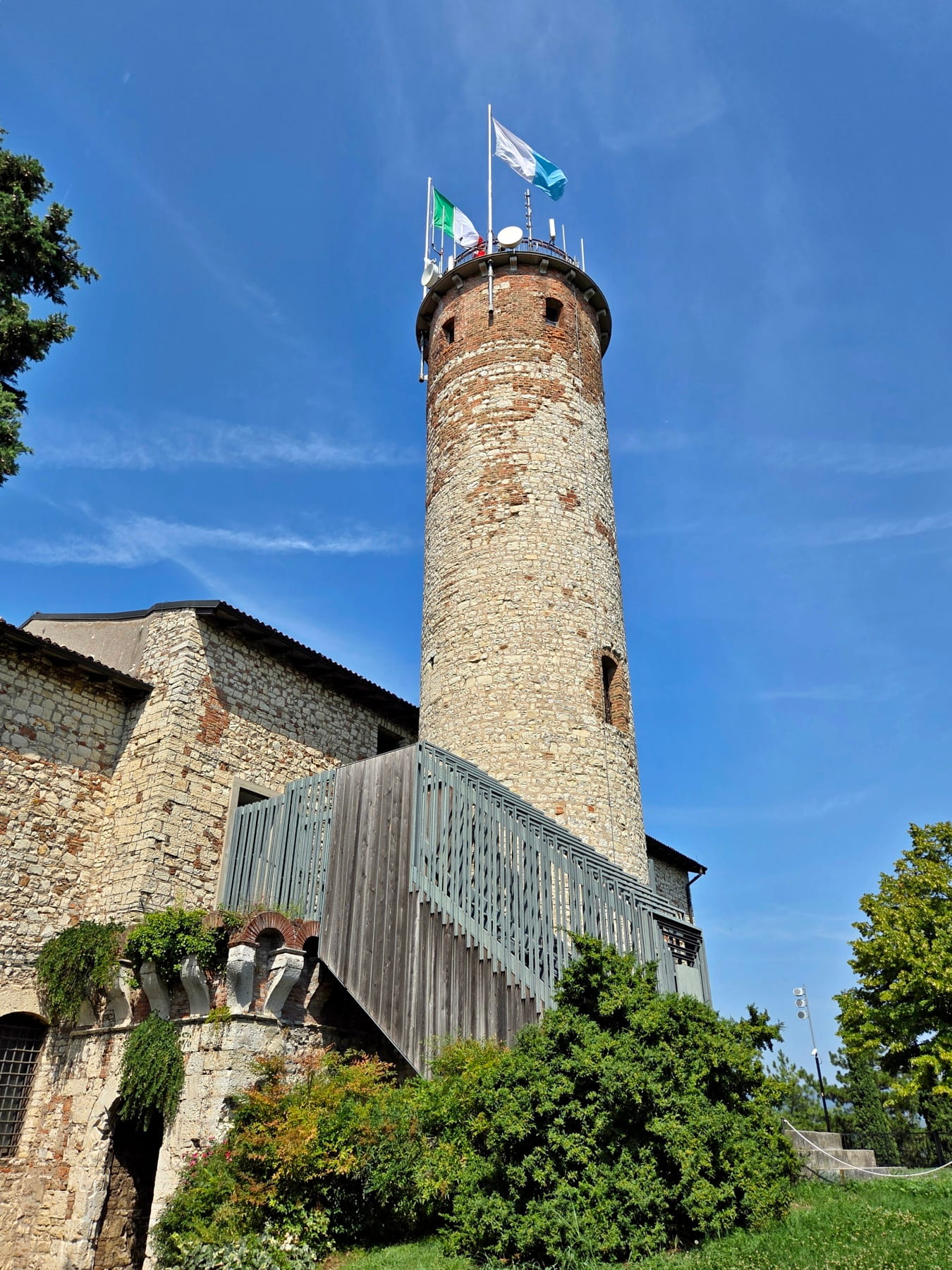
The Mirabella Tower: This is the oldest standing part of the castle, dating back to the medieval period. It was built on the site of an even older Roman temple, parts of which are still visible if you look closely at the foundations.
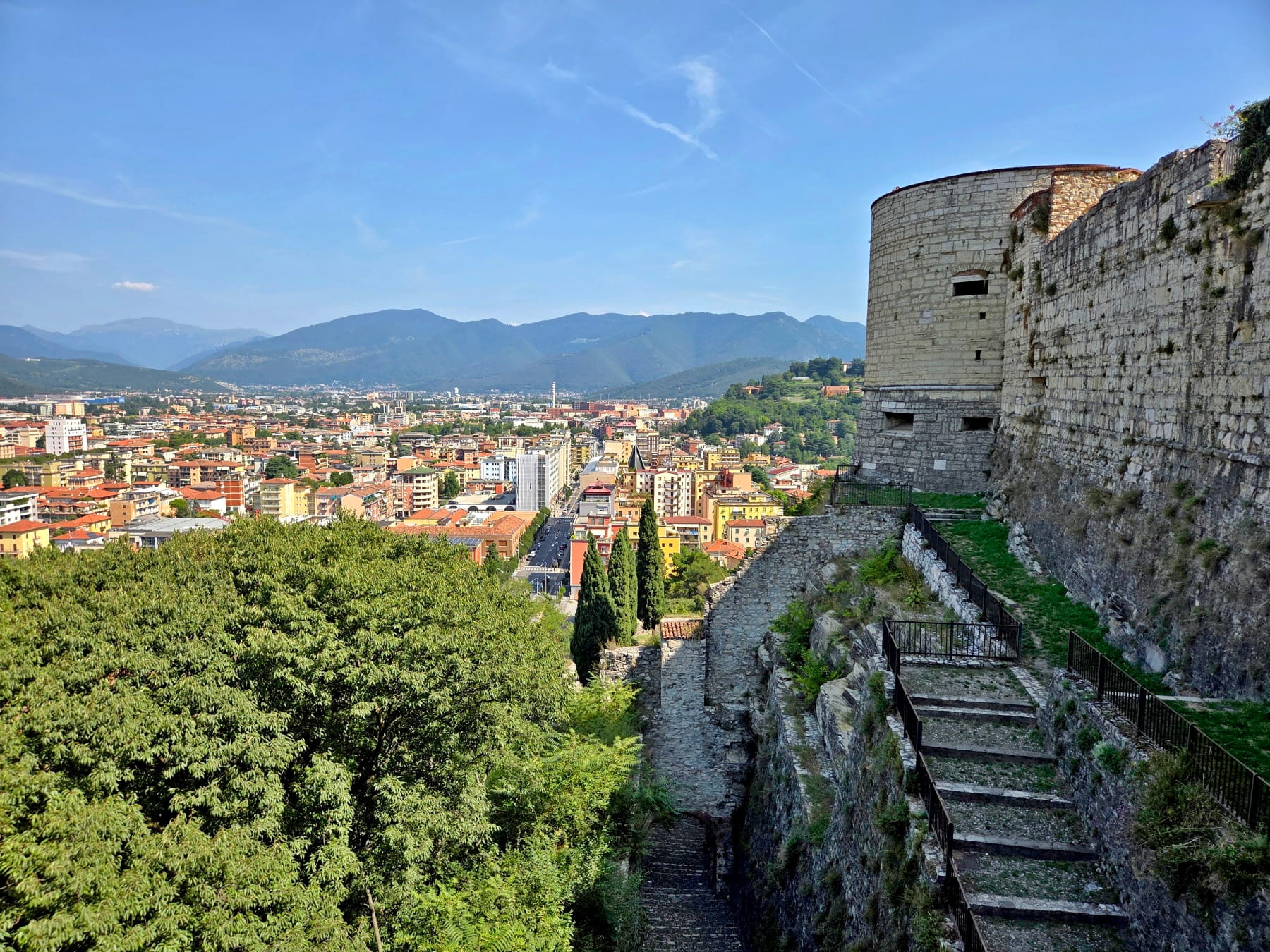
Panoramas from the Ramparts: The walk along the outer walls provides a 360-degree view. To the south, you can see the red-tiled roofs of the historic center, including the distinctive dome of the Duomo Nuovo. To the north, the view opens up toward the mountains.
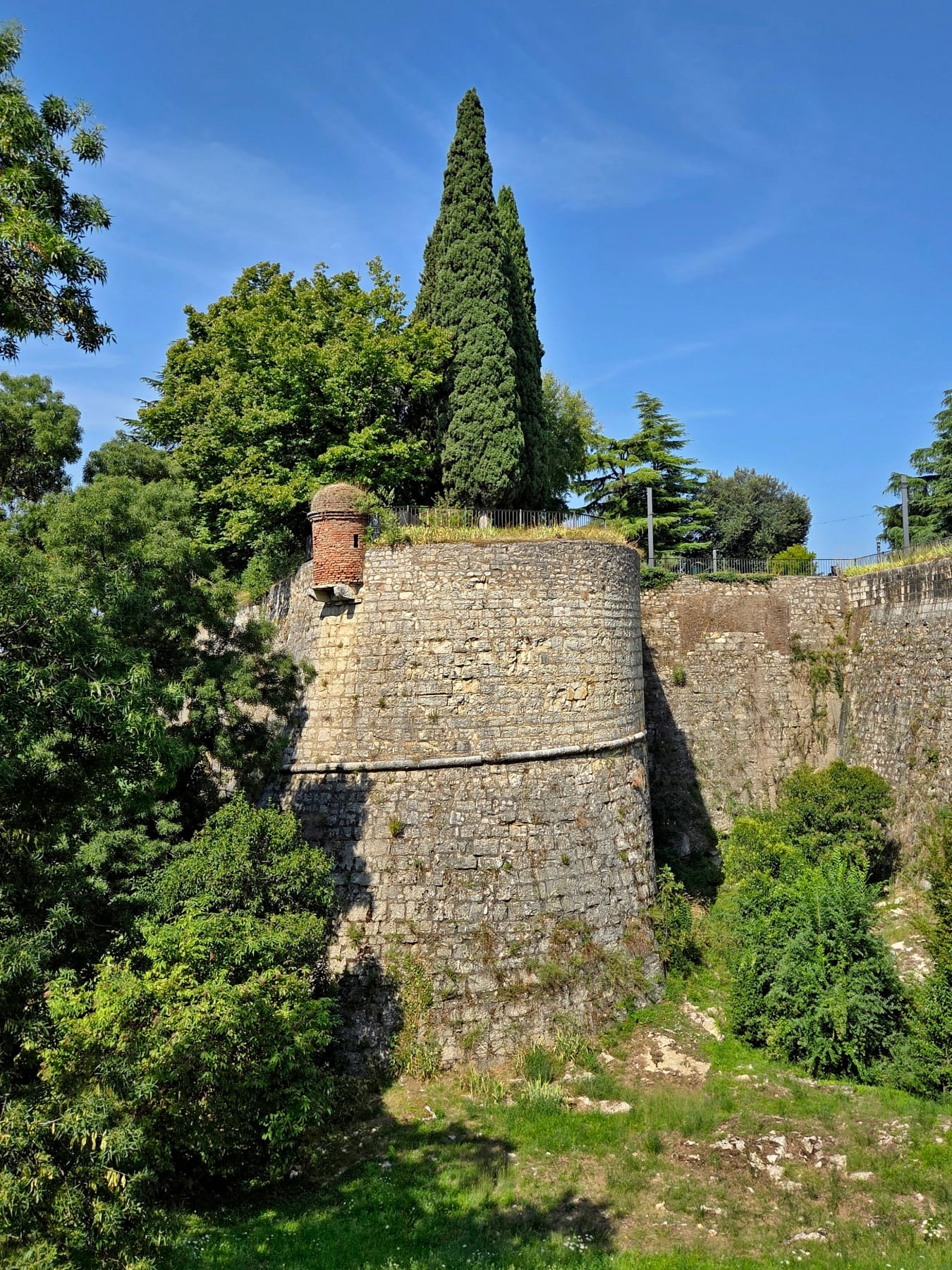
The Keep (Mastio): The central fortified tower, built by the Visconti family of Milan, is the heart of the fortress. It is surrounded by a deep moat and represents the peak of medieval fortification design in the region.
The Gardens and Vineyards: Interestingly, the slopes of Cidneo Hill still host urban vineyards. The castle grounds are filled with tall trees and shaded benches, making it a popular spot for locals to relax.
Practical information
Brescia Castle is located on the Cidneo Hill, directly overlooking the city center. It is easily accessible for different types of travelers.
Access: If you are coming from the city center, specifically from the Roman ruins (Capitolium), the walk takes about 15 to 20 minutes. Be aware that the path is quite steep. However, for those who prefer not to hike, there is a large parking lot right in front of the castle entrance, allowing you to drive up and save your energy for exploring the ramparts.
Opening Hours and Fees: The castle grounds and park are open to the public for free from 6:00 AM to 11:00 PM. This makes it an excellent spot for an early morning walk or a late evening view of the city lights. While the grounds are free, there is an admission fee for the Arms Museum and the Risorgimento Museum located within the buildings.
Time Needed: To walk the perimeter and enjoy the views, allow at least 90 minutes. If you plan to visit the museums, you should set aside a full morning or afternoon.
Web: More information about opening hours and entrance fees to exhibitions can be found on the castle’s official website.
While access to the castle grounds is free, the museums inside require a ticket and have limited opening hours. If you are interested in the exhibitions, it’s a good idea to check availability in advance, especially during weekends and holidays.
Tips for visitors
Take Advantage of the Shade: The castle grounds are well-maintained with many mature trees. Under the shade of these trees, you will find several benches. It is a perfect spot to bring a snack or a small picnic, as the breeze on the hill is much cooler than in the streets below.
Photography Timing: For the best light over the city, visit in the late afternoon. The sun sets behind the hills, casting a warm glow over the Duomo Vecchio & Duomo Nuovo and the surrounding squares.
Check the Event Calendar: During the summer months, the castle often hosts open-air cinema, concerts, and historical reenactments. The atmosphere during these events is unique, as the ancient walls are illuminated.
Wear Proper Shoes: Even if you drive to the parking lot, the terrain inside the castle is uneven, with cobblestones and gravel paths. Sturdy walking shoes are recommended.
If you plan to visit the museums or combine multiple historical sites in one day, it’s worth checking opening times and ticket options in advance to avoid unnecessary waiting.
How to Visit Brescia Castle
Brescia Castle is best visited as part of a walking route through the historic center. Most visitors combine it with the nearby Roman ruins (Capitolium) and the Santa Giulia Museum, which together form a UNESCO World Heritage site.
If you want a deeper understanding of the history, consider visiting the museums inside the castle or joining a guided tour that connects the castle with the Roman remains below. This is especially useful if you only have one day in Brescia and want to make the most of your visit.
Nearby places
After descending from the hill, you can easily reach several other key landmarks in Brescia’s historic core:
Roman Ruins (Capitolium): Located at the base of the hill, this archaeological site features the remains of a Roman temple and theater.
Piazza della Loggia: A beautiful Renaissance square characterized by its elegant clock tower and Venetian-style palace.
Duomo Vecchio & Duomo Nuovo: A unique architectural pair consisting of a circular Romanesque “Old Cathedral” and a grand 17th-century “New Cathedral.”
Piazza della Vittoria: A wide, open square that showcases 1930s Rationalist architecture, providing a stark contrast to the medieval castle.
Brescia Castle is not just a historical site—it’s one of the best places to understand how the city evolved over time. Take your time here, and use it as a starting point to explore the rest of Brescia’s historic center.